
My Cart
Order Note


Mattress

Recliner Sofa

Chair

Desk

Elite Sofa

Massager

Recliner Bed

Pillows

Cushions

Bedding
Mattress
Recliner Bed
Recliner Sofa
Elite Sofa
Chair
Desk
Bedding
Pillow & Cushion
Massager
Mattress
Pillow & Cushion
Chair
Desk
Recliner Sofa
Recliner Bed
Elite Sofa
Bedding
Massager
Talk to Us
Get Help Choosing the Right Product

Stores near you
Find and visit our experience stores
Request a call back
Talk to our experts about our products
For your New Home
Find the perfect mattress - chat now


My Cart


Workouts challenge your body in the best possible way. Whether you are strength training, running, cycling or simply staying active, exercise helps build strength, improve mobility and support overall health and wellbeing.
But every workout also places stress on your muscles. As muscles work harder than they are accustomed to, small amounts of wear and tear can occur. Recovery is what allows the body to repair and adapt to this stress.
Two things are particularly important: proper stretching before a workout and adequate rest afterwards. But there is another part of recovery that often gets overlooked—peaceful, restful sleep.
If you are wondering, does sleep help muscle recovery? The answer is yes. Sleep is an active biological process, not simply time when the body switches off.
During deeper stages of sleep, the body increases processes involved in tissue repair and recovery. Hormonal activity supports muscle repair, while the body works to restore energy and recover from the physical demands of the day.
This makes deep sleep and recovery closely connected. Adequate sleep also supports protein synthesis—the process through which the body uses amino acids to repair and build muscle tissue.
So, while exercise provides the stimulus, recovery gives your body the opportunity to respond to it.
Stretching can be a useful part of preparing your body for movement and maintaining flexibility. However, it cannot replace adequate rest.
When comparing recovery sleep vs stretching, they serve different purposes. Stretching can prepare the body for activity, while sleep provides the broader physiological recovery environment needed after that activity.
This is why sleep for gym recovery should be treated as part of your fitness routine rather than something separate from it.
If you regularly feel sore even after resting, your body may need more recovery time, better sleep or adjustments to your training routine. Persistent or unusual pain should always be assessed by a healthcare professional.
There is no universal number that guarantees muscle growth, as sleep requirements vary with age, activity levels and individual needs. However, most adults generally need around 7–9 hours of sleep per night.
For people who train regularly, consistently getting enough sleep can support physical recovery, energy levels and exercise performance.
This is particularly relevant to sleep and gym performance. Poor sleep can leave you feeling less energetic and focused, making workouts feel harder, potentially affecting coordination and performance.
For athletes, rest becomes even more important. Training creates the demand; recovery allows the body to meet that demand again. Consistently sleeping well can help athletes maintain performance across training sessions instead of constantly exercising on an incompletely recovered body.
During deep sleep, the body enters a state that supports restoration and repair. Processes involved in tissue recovery and protein synthesis continue while energy stores are replenished.
Is this why sleep affects protein synthesis? Yes—sleep is one of several factors that influence the body’s ability to repair and build muscle. Nutrition, training and overall recovery also play important roles.
Simply put, you cannot train your way out of inadequate recovery.
Your mattress does not directly repair muscles, but it can influence the quality of sleep you get.
An uncomfortable mattress can create pressure points, inadequate support or excessive sinking, making it harder to settle into a comfortable sleeping position. If your sleep is repeatedly disturbed, your recovery may suffer.
This makes choosing the right mattress for muscle recovery an important part of creating a sleep environment that supports your fitness routine.
For people asking what mattress is best for athletes, the answer is not necessarily the hardest or softest option. The mattress should provide the right balance of support and comfort for your body and sleeping position.
There is no single firmness level that works for every athlete.
A mattress that is too soft may allow excessive sinking, while one that is too firm may create pressure around areas such as the shoulders and hips. An orthopedic mattress with balanced, responsive support can be a good option for people who want greater stability while sleeping.
The best mattress for athletes should help you maintain a comfortable sleeping position and provide consistent support throughout the night.
For those looking for the best sleep for fitness, The Sleep Company offers many orthopedic mattress options designed around different comfort and support needs:
This is a strong choice for those looking for firm and even support. The different layers provide comfort balanced with firmness. They support different parts of the body ensuring a peaceful sleep experience.
A supportive medium-firm option for hot sleepers who want to combine recovery-focused comfort with a cooler sleep experience. Its cooling top layer makes it particularly suitable for people who tend to sleep warm, especially after active days.
This medium-firm mattress provides dependable back support along with plush comfort. The quilted top layer elevates the sleep experience for those looking to prioritize quality rest for recovery.
Your workout is only one part of the fitness equation. Stretching, nutrition, hydration and rest all contribute to how your body responds to exercise.
But when it comes to sleep and muscle recovery, sleep deserves a place at the centre of your recovery routine. Getting enough quality sleep can support muscle repair, replenish energy and help you return to your next workout feeling more prepared because the best training routine is not simply the one that pushes you harder. It is the one that gives your body enough time and the right conditions to recover.


Written by Dipti Mestry Pregnancy can bring many wonderful changes, but it can also bring a few...
Read More
Written by Dr. Aishwarya Panchal One of the most common assumptions I hear from patients with back...
Read More
Most people shopping for a new mattress in India right now compare two very different surface categories....
Read More
Buying a new mattress and realising the size is wrong is one of the most avoidable life...
Read More
Most mornings the ache between your shoulders or lower back fades by mid-morning and you chalk it...
Read More
Three mornings of waking up stiff and most people start blaming the gym, the commute, or how...
Read More
There is a surface in almost every Indian home pressed against the body for seven or eight...
Read More
Most people press down on a few mattresses in a showroom for ten minutes and spend the...
Read More
Waking up with a stiff back, a numb shoulder, or that dull ache below the hips does...
Read More
Most adult children notice the signs long before their parents do. A parent who used to sleep...
Read More
Picture a household in a coastal Indian city where one family member starts waking up congested every...
Read More
Spring mattresses are the common choice across most Indian households and have been for decades. They are...
Read More
Walk through any Indian apartment building between May and August and the pattern is identical from floor...
Read More
The bed frame size printed on a purchase receipt is often the only number a buyer brings...
Read More
Most people buying a mattress spend more time testing surface feel than thinking about what the sleeping...
Read More
Walk into most Indian homes and ask about the mattress, and the answer follows a familiar pattern:...
Read More
Walk into any mid-size Indian city's furniture market and the inventory looks roughly the same as it...
Read More
Most Indian households buy a new mattress when the old one becomes obviously unusable a visible sag,...
Read More
Indian summer nights are not simply warm they are a specific combination of heat above 35°C, relative...
Read More
Walk into any furniture showroom and ask about the best mattress for kids, and the answer almost...
Read More
Your kid sleeps more than you do. Ten to twelve hours daily for school-age children. During...
Read More
What Is an Orthopedic Mattress? Quick Answer: An orthopedic mattress is a sleep surface specifically designed for...
Read More
Memory foam changed how people think about mattresses. The material moulds to body shape in ways traditional...
Read More
Queen Size Mattress Dimensions Quick Answer: The standard queen size mattress dimension in India is 72 x...
Read More
Cooling Mattress Topper: Technologies, Types and How to Choose Memory foam mattress owners in India report sleeping...
Read More
Most couples don't realize their sleep problems stem from their mattress until one partner starts waking up...
Read More
A 68-year-old man complained about his back for three years straight. Three years. His family tried everything,...
Read More
Which Mattress Is Good for Health: Your Complete Guide to Peaceful Sleep in 2026 Most people spend...
Read More
Best Cooling Mattress for Hot Sleepers in India Walk through any Indian apartment building between May and...
Read More
MS Dhoni is not just your average Indian cricketer. Loved from all the corners of the nation,...
Read More
MS Dhoni’s Sleep Routine and the Meaning Behind ‘8’ MS Dhoni’s quiet decision to swap his jersey...
Read More
Waking up with a stiff back ruins your entire day, doesn't it? You drag yourself out of...
Read More
Latex vs Memory Foam Mattress: Which Is Better for Back Pain? It's already midnight. You are tossing...
Read More
What Is a Mattress Topper? Benefits, Types & How to Choose the Best One in India Your...
Read More
Foam Mattress vs Spring Mattress: Which Mattress Type Suits You Best? Your mattress affects your sleep quality...
Read More
Tips for Choosing the Right Mattress for Old People: A Complete Guide A 68-year-old man complained about...
Read More
Choosing the right mattress size affects your sleep quality more than most people realise especially in Indian...
Read More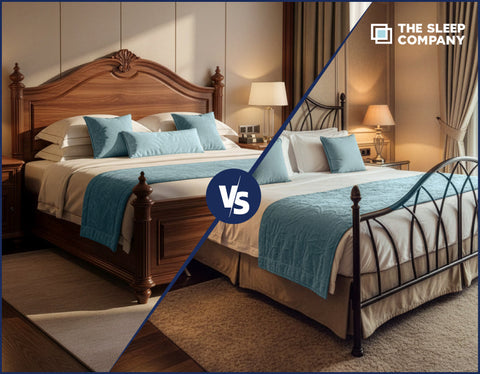
Here's something most people don't think about: your bed frame isn't just holding up your mattress -...
Read More
You've probably had this thought at least once, why does every hotel bed feel amazing while your...
Read More
Your mattress is probably the second-biggest purchase you’ll make after a car or home, somewhere between ₹15,000...
Read More
Your mattress collects roughly 500 million skin cells every year. Not a typo. That's half a billion...
Read More
What is SmartGRID? A Revolution for the Mattress Industry/Comfort Industry SmartGRID is designed with Japanese Patented Technology...
Read More
A major shift is underway in the mattress sector in India. Most Indians are ditching legacy mattress...
Read More
Do you wake up every morning with a serious dose of back pain? Then, a good orthopedic...
Read More
Queen Vs King Bed: Complete Size Guide for Indian Bedrooms Choosing between a queen bed vs king...
Read More
The 2025 GST overhaul brings clarity and efficiency to Indias tax landscape, placing mattresses squarely under the...
Read More
Which Mattress is Good for Health? Discover Several Benefits and How to Choose the Right One Do...
Read More
Soft, Medium or Firm Mattress (2025), Which is Best For You? Most people discover their mattress firmness...
Read More
Choosing the best mattress in India isn’t as simple as it seems. We get it! With countless...
Read More