
My Cart
Order Note


Mattress

Recliner Sofa

Chair

Desk

Elite Sofa

Massager

Recliner Bed

Pillows

Cushions

Bedding
Mattress
Recliner Bed
Recliner Sofa
Elite Sofa
Chair
Desk
Bedding
Pillow & Cushion
Massager
Mattress
Pillow & Cushion
Chair
Desk
Recliner Sofa
Recliner Bed
Elite Sofa
Bedding
Massager
Talk to Us
Get Help Choosing the Right Product

Stores near you
Find and visit our experience stores
Request a call back
Talk to our experts about our products
Comfort Quiz
Get a chance to win a free recliner!


My Cart


A 68-year-old man complained about his back for three years straight. Three years. His family tried everything, physiotherapy, pain balms, those copper bracelets renowned for their holistic and healing properties, but nothing helped. It turned out that his twenty-year-old mattress was the problem all along.
That's the thing about finding the right mattress for seniors. It's rarely the first thing anyone thinks to check. But here's what becomes clear after watching several families navigate this: the bed you sleep on affects absolutely everything. Energy levels. Mood swings. How much those knees ache when climbing stairs.
A proper mattress for elderly individuals does more than provide comfort. It supports ageing joints, maintains spinal alignment, and makes the difference between waking up refreshed or waking up stiff.
The Sleep Company's orthopedic mattress range was designed with exactly these needs in mind. But before diving into specific products, understanding what the body actually requires comes first.
Bodies change after 60. Not exactly breaking news. But the specific ways they change matters especially when you're picking a mattress for old age.
Muscle mass starts declining around the sixties, about 3-5% per decade, according to most studies. Less natural muscle support means the mattress needs to pick up the slack. The spine doesn't have the same cushioning it did at forty.
Then there's the sleep architecture stuff. Sounds technical, but basically: seniors spend less time in deep sleep. Wake up more often. Feel drowsy earlier in the evening and end up staring at the ceiling at 4 AM.
Circulation slows down too. Cold feet. Restless legs. That pins-and-needles feeling after lying in one position too long.
A mattress for old people needs to account for all of this. Not just surface comfort, actual physiological support that adapts to an ageing body. Sleep issues compound with age. The wrong mattress makes everything worse.
Here's a simple test. Tomorrow morning, pay attention. Does your back hurt? Are your shoulders stiff? Hips aching?
Now track whether that pain fades within an hour or two of getting up.
If it does, if the body feels fine by mid-morning, the mattress is almost certainly the culprit. That's not arthritis talking. That's eight hours on a surface that isn't providing proper support.
Other signs your mattress is causing back pain: visible dips or valleys where you sleep (the foam has compressed permanently), springs poking through, sleeping better in hotels than at home (always a telling sign).
Most mattresses last 7-8 years. Maybe 10 with something premium and proper care. Any mattress for seniors older than that probably needs replacing regardless of how it feels.
Forget the marketing jargon for a moment. Here's what genuinely makes a difference when choosing the best mattress for older people.
Not meant in a judgmental way, it's just physics. A person weighing 60 kg interacts with a mattress completely differently than someone at 95 kg.
Heavier individuals sink deeper. They need firmer support to prevent that hammock effect where hips drop and the spine curves unnaturally. Lighter folks often find firm mattresses uncomfortable because they can't compress the surface enough to get any contouring.
Patented SmartGRID Technology handles this rather cleverly. The grid structure buckles under pressure points, shoulders, hips, while staying firm where support is needed. It works across different body types without requiring different firmness levels. Any mattress for elderly individuals should adapt to body weight, not fight against it.
Arthritis: About half of everyone over 65 deals with some form of arthritis. The last thing inflamed joints need is a mattress that creates pressure points. Something that distributes weight evenly works best, medium-firm usually, with enough give to cushion without letting the body sink. The Smart Ortho Mattress hits this balance well. The Ortho Relief Foam layer cushions joints while the Patented SmartGRID Technology maintains spinal alignment. An excellent mattress for old age when joint pain is the primary concern.
Chronic Back Pain: Different beast entirely. Back pain typically needs firmer support, especially in the lumbar region. The 5-zone orthopedic support in the Smart Ortho Pro Mattress targets this specifically, with different firmness zones for head, shoulders, lower back, hips, and legs. Not everyone needs this level of support. But for those dealing with back issues for years, it's worth considering as a mattress for old people with chronic pain.
Circulation Problems: Pressure-relieving surfaces help here. When a mattress compresses blood vessels, that restless, need-to-move-constantly feeling kicks in. The 2,500 air channels in SmartGRID mattresses keep things temperature-neutral too, which helps with circulation.
Quick anatomy lesson. When sleeping on the side, the shoulder and hip take most of the body weight. These are bony prominences, not much padding there naturally.
A mattress for seniors that's too firm creates painful pressure points. Too soft, and the spine curves into a banana shape because the waist sags unsupported.
The ideal mattress for elderly side sleepers allows shoulders and hips to sink slightly, just enough to keep the spine straight while supporting the waist. SmartGRID does this through its wall-buckling mechanism. The grid walls collapse under pointed pressure (bone on mattress) while staying supportive under flatter areas. Testing showed about 34% less pressure on side-sleeping contact points compared to regular foam.
For those specifically searching for the best mattress for senior side sleepers, medium to medium-firm options with adaptive surfaces work best. Most seniors are combination sleepers anyway, starting on their side, ending up on their back, shifting throughout the night. A responsive mattress for old age that adjusts to each position matters more than one optimised for a single sleeping style.
Here's something people underestimate. A cramped mattress forces you to stay in uncomfortable positions longer. No natural shifting. Waking up stiff because of lying the same way for hours.
| Size | Dimensions | Best For |
|---|---|---|
| Single | 90 x 190 cm | Solo sleepers who don't move much; tight spaces |
| Queen | 150 x 200 cm | Most popular for seniors; couples who want space to move |
| King | 180 x 200 cm | Both partners with mobility issues; restless sleepers; reduced partner disturbance |
The mattress size guide has exact dimensions for reference. One thing people forget when buying a mattress for seniors: if using a walker or wheelchair, measure the pathways around the bed. A king mattress in a small room might block access. Explore king size mattress options if space allows.
Everyone asks: soft or firm mattress? That's the wrong question.
The right answer for a mattress for elderly individuals is almost always medium-firm, somewhere around 6-7 on a 10-point scale. The lower back needs firm support. Without it, the pelvis sinks and the spine hyperextends. That's where morning back pain comes from. But shoulders and hips, especially for side sleepers, need cushioning. Too firm and it's like lying on rock. Medium-firm threads the needle.
Smart Ortho sits around 6.5. Approved by the All India Health Association for back pain relief. Smart Ortho Pro is firmer, about 8, for chronic back conditions where maximum support matters. Smart Ortho Hybrid adds pocketed springs for a bit of bounce for those who find pure foam too quiet.
Here's what nobody mentions about a mattress for old age: firmness perception changes with age. What felt medium at 35 often feels soft at 65 because of muscle mass loss. When uncertain, go slightly firmer.
Edge support rarely gets attention until someone has trouble getting out of bed. Most people sit on the mattress edge before lying down and when they wake up. If that edge collapses under body weight, standing up becomes unstable. Real fall risk for anyone with balance issues.
Poor edge support also shrinks usable sleeping area. The perimeter gets avoided unconsciously because it sags. On a queen mattress, that can mean losing 15-20 cm on each side. Suddenly a queen feels like a single.
SmartGRID extends fully to the edges, giving the same support throughout the mattress. Sitting right on the corner works without that sinking feeling, an essential feature in any mattress for seniors. For elderly individuals who spend significant time in bed during the day, pairing a supportive mattress for old people with an adjustable recliner bed makes sense. Multiple sitting positions, easier transitions.
Hot sleepers know this frustration. Falling asleep is fine, then waking at 2 AM sweating, throwing off covers, then getting cold, pulling them back. Memory foam is terrible for this. It absorbs body heat and holds it. Like sleeping on a warm sponge. SmartGRID's air channels keep the surface temperature-neutral and promote better air circulation than memory foam. Any good mattress for elderly users should regulate temperature effectively.
A good mattress for old age handles the basics. But adjustable beds are genuinely transformative for seniors, not just fancy gadgets.
Circulation benefits: Elevating legs above heart level reduces swelling. Helps with varicose veins, diabetic circulation issues, general fluid retention. Breathing: Raising the head opens airways, reduces snoring, eases sleep apnoea symptoms. Acid reflux: Sleeping slightly elevated keeps stomach acid where it belongs. Common issue for seniors on multiple medications. Getting up: An adjustable bed can raise to a sitting position, making standing easier. Less strain on knees and back. More independence.
The Elev8 Smart Recliner Bed has a zero-gravity mode, a NASA-designed position that distributes weight evenly and reduces spine pressure. Also a TV mode for reading or watching shows and a dual massage function for relaxation. Read more on the benefits of adjustable beds for senior citizens. Practical note: not all mattresses work with adjustable frames. Foam and SmartGRID mattresses flex fine. Traditional innerspring with rigid borders might not bend properly.
Seniors benefit from consistency. Sleep routines matter. Constantly adapting to new mattresses disrupts that. Durability in a mattress for old people isn't just about value, though spending ₹50,000 on something that lasts 10 years beats ₹30,000 on something that's shot after 4.
Low-density foam compresses permanently. Sleeping in a body-shaped ditch becomes the norm. Cheap springs lose tension and stop bouncing back. Poor edge construction breaks down where people sit most. SmartGRID's hyper-elastic polymer was engineered differently. It springs back to the original shape after each use and doesn't develop permanent impressions. All Sleep Company mattresses carry a 10-year warranty. Protect the investment with a bamboo mattress protector. Keeps out spills, dust mites, general wear. Breathable, so it doesn't interfere with the mattress's airflow.
Traditional mattresses need flipping every few months, rotation and airing out. Physically demanding tasks most elderly individuals can't do safely. Patented SmartGRID® Technology mattresses don't require flipping ever. The construction maintains consistency regardless of orientation. The 2,500 air channels handle ventilation automatically. No need to prop a mattress for elderly users against a wall to air it out.
Here's literally all that's needed: vacuum gently over the surface monthly, wash the protector every few months, and check for any visible wear yearly. That's it. No heavy lifting. No complicated care routines.
Quality mattresses aren't cheap. No point pretending otherwise. But do the maths. A ₹40,000 mattress for old age used for 10 years costs about ₹11 per night. Less than a cup of tea. Compared to physiotherapy sessions, pain medications, or simply feeling exhausted every day, it's actually quite economical.
The Sleep Company offers EMI options. Interest-free. Makes premium mattresses accessible without a massive upfront payment. And there's a 100-night trial. Sleep on it for three months. If it doesn't work, return it. Full refund. No risk. Where to spend vs save: always prioritise mattress quality over bed frame aesthetics. A great mattress on a basic frame beats a mediocre mattress in an expensive frame every single time.
Selecting the right mattress for seniors comes down to matching real needs to specific features. Not marketing claims. Not what worked for the neighbour. Body weight. Health conditions. Sleep style. What the body actually requires.
A proper mattress for elderly individuals delivers:
The Sleep Company's orthopedic range addresses these systematically. Both Smart Ortho and Smart Ortho Pro carry AIHA approval, genuine medical endorsement for any mattress for senior citizens. For those seeking the best mattress for senior citizens, the 100-night trial removes the risk entirely. Sleep on it. If it doesn't work, send it back. No questions, full refund.
Browse the orthopedic mattress collection to find the right mattress for old people that fits specific needs. Or visit a store. Sometimes lying down on something is the only way to know. Quality sleep is worth getting right.
Medium-firm for most, around 6-7 on a 10-point scale. A mattress for elderly individuals needs enough support for spinal alignment whilst cushioning pressure points. Heavier individuals might prefer 7-8. Those with severe joint sensitivity could go slightly softer, 5-6.
Every 7-8 years typically. High-quality options last longer. Replace any mattress for old age sooner if noticing sagging, worsening sleep, or increased morning stiffness.
The best mattress for older people with back pain offers medium-firm to firm support with pressure relief. Patented SmartGRID Technology provides both, firm support for the spine and cushioning for pressure points. The Smart Ortho Pro is specifically designed for chronic back conditions.
Memory foam offers pressure relief but traps heat and limits mobility. Not ideal as a mattress for old people who need to change positions easily. SmartGRID combines pressure relief with better temperature regulation and easier movement.
A mattress for seniors who sleep on their side needs cushioning at shoulders and hips whilst maintaining spinal alignment. Medium to medium-firm with adaptive surfaces works best. SmartGRID's wall-buckling mechanism reduces pressure by about 34%.
Yes. A pressure-relieving mattress for elderly individuals reduces stress on inflamed joints. You are less likely to wake up stiff and sore. It can improve sleep quality and morning comfort.
Usually, yes, but not rock hard. Medium-firm works best as a mattress for old people because muscle mass decline means less natural support for the spine. The mattress needs to compensate. But too firm creates its own problems, particularly for side sleepers.
Strong edge support is essential in any mattress for old age. It provides a stable surface for sitting and standing. Responsive mattresses that don't trap sleepers in a sinking position help too. Adjustable bed frames that raise to sitting position provide the most assistance.
They genuinely help with arthritis pain. The SmartGRID technology distributes weight evenly across the surface, reducing concentrated pressure on inflamed joints. Instead of your hip bearing all the pressure in one spot (like on firm traditional mattresses), the load spreads out. We'd specifically recommend the Smart Ortho or Ortho Pro for arthritis—both are AIHA certified, meaning actual doctors at the All India Health Association tested and approved them for orthopedic conditions. Not just marketing claims. Most arthritis patients report 40-60% reduction in night-time pain within 3-4 weeks.
If you're grimacing getting into bed, can't sleep because it feels like concrete, or wake up with new pain in pressure points (shoulders, hips), it's too firm. Most seniors do well with firmness 6-8 on a 10-point scale. The Smart Ortho (6-7) suits about 70% of seniors; the Ortho Pro (8) handles serious back pain but takes adjustment. Anything above 9 is typically too hard unless specifically prescribed by an orthopedic surgeon for post-surgical recovery. Traditional "orthopedic" mattresses were often just hard foam—uncomfortable and not scientifically designed. Modern orthopedic mattresses like ours balance support with pressure relief.
Proper spinal and joint support dramatically reduces morning stiffness. When your spine stays aligned all night instead of twisting awkwardly on a sagging mattress, inflammation decreases. When pressure points get cushioned instead of compressed, joints don't stiffen up. It's not overnight magic—expect 2-4 weeks to see significant improvement. Mrs. Patel's morning stiffness reduced from 30 minutes to about 5 minutes within a month of switching to Smart Ortho Pro. Her rheumatologist was impressed enough to start recommending it to other patients.
Definitely go for the SnowTec option. Standard foam traps heat like a blanket; SmartGRID's air channels genuinely improve breathability by 300% compared to memory foam. The SnowTec version adds cooling fabric that measurably reduces surface temperature by 4-6°C. We tested this with thermal imaging—it's not marketing fluff. For medication-induced sweating, also consider bamboo sheets (naturally cooling) and keeping bedroom temperature around 18-20°C. The mattress alone won't solve everything, but it's the biggest factor.
Yes, all SmartGRID mattresses work with adjustable frames, hospital beds, and medical adjustable bases. The SmartGRID layer is flexible enough to bend with the base without losing support properties. Traditional innerspring mattresses can't do this—the springs get damaged. Memory foam technically bends but loses its support characteristics. SmartGRID maintains both flexibility and support. Just ensure the mattress isn't placed on slats spaced more than 2 inches apart (causes sagging through gaps).
With proper care (rotating every 3 months, using a protector, not jumping on it), these last 10-12 years easily. The hyper-elastic polymer in SmartGRID doesn't break down like foam does. Foam compresses permanently over time—that's why old mattresses sag. SmartGRID bounces back to its original shape for years. The 10-year warranty indicates genuine confidence in longevity. Compare that to most mattresses with 1-3 year warranties. Proper care means: rotate (not flip) every 3 months, use a protector, keep it on a solid base, don't let pets with claws scratch the surface.
The Smart Ortho Pro or Pro SnowTec specifically handle heavier individuals well. SmartGRID's structure is weight-responsive but doesn't compress permanently. Traditional foam gets crushed under consistent heavy weight, creating permanent body impressions. SmartGRID's grid walls buckle to cushion but spring back immediately. For individuals over 90kg, we strongly recommend firmer options (firmness 7-8) to prevent excessive sinking. The Ortho Pro is tested and certified for individuals up to 120kg without compromising support or longevity.
Very few contraindications. If recovering from spinal fusion surgery, consult your surgeon first—they may have specific firmness requirements during initial healing (usually 6-8 weeks). If you have severe osteoporosis with recent fractures, get medical clearance because position changes require care. For individuals with certain pressure ulcer risks (completely bedridden, no sensation), specialized medical mattresses with alternating pressure may be necessary. For 99% of seniors, these mattresses are suitable and beneficial. When in doubt, ask your doctor or physiotherapist.


Workouts challenge your body in the best possible way. Whether you are strength training, running, cycling or...
Read More
Written by Dipti Mestry Pregnancy can bring many wonderful changes, but it can also bring a few...
Read More
Written by Dr. Aishwarya Panchal One of the most common assumptions I hear from patients with back...
Read More
Most people shopping for a new mattress in India right now compare two very different surface categories....
Read More
Buying a new mattress and realising the size is wrong is one of the most avoidable life...
Read More
Most mornings the ache between your shoulders or lower back fades by mid-morning and you chalk it...
Read More
Three mornings of waking up stiff and most people start blaming the gym, the commute, or how...
Read More
There is a surface in almost every Indian home pressed against the body for seven or eight...
Read More
Most people press down on a few mattresses in a showroom for ten minutes and spend the...
Read More
Waking up with a stiff back, a numb shoulder, or that dull ache below the hips does...
Read More
Most adult children notice the signs long before their parents do. A parent who used to sleep...
Read More
Picture a household in a coastal Indian city where one family member starts waking up congested every...
Read More
Spring mattresses are the common choice across most Indian households and have been for decades. They are...
Read More
Walk through any Indian apartment building between May and August and the pattern is identical from floor...
Read More
The bed frame size printed on a purchase receipt is often the only number a buyer brings...
Read More
Most people buying a mattress spend more time testing surface feel than thinking about what the sleeping...
Read More
Walk into most Indian homes and ask about the mattress, and the answer follows a familiar pattern:...
Read More
Walk into any mid-size Indian city's furniture market and the inventory looks roughly the same as it...
Read More
Most Indian households buy a new mattress when the old one becomes obviously unusable a visible sag,...
Read More
Indian summer nights are not simply warm they are a specific combination of heat above 35°C, relative...
Read More
Walk into any furniture showroom and ask about the best mattress for kids, and the answer almost...
Read More
Your kid sleeps more than you do. Ten to twelve hours daily for school-age children. During...
Read More
What Is an Orthopedic Mattress? Quick Answer: An orthopedic mattress is a sleep surface specifically designed for...
Read More
Memory foam changed how people think about mattresses. The material moulds to body shape in ways traditional...
Read More
Queen Size Mattress Dimensions Quick Answer: The standard queen size mattress dimension in India is 72 x...
Read More
Cooling Mattress Topper: Technologies, Types and How to Choose Memory foam mattress owners in India report sleeping...
Read More
Most couples don't realize their sleep problems stem from their mattress until one partner starts waking up...
Read More
Which Mattress Is Good for Health: Your Complete Guide to Peaceful Sleep in 2026 Most people spend...
Read More
Best Cooling Mattress for Hot Sleepers in India Walk through any Indian apartment building between May and...
Read More
MS Dhoni is not just your average Indian cricketer. Loved from all the corners of the nation,...
Read More
MS Dhoni’s Sleep Routine and the Meaning Behind ‘8’ MS Dhoni’s quiet decision to swap his jersey...
Read More
Waking up with a stiff back ruins your entire day, doesn't it? You drag yourself out of...
Read More
Latex vs Memory Foam Mattress: Which Is Better for Back Pain? It's already midnight. You are tossing...
Read More
What Is a Mattress Topper? Benefits, Types & How to Choose the Best One in India Your...
Read More
Foam Mattress vs Spring Mattress: Which Mattress Type Suits You Best? Your mattress affects your sleep quality...
Read More
Tips for Choosing the Right Mattress for Old People: A Complete Guide A 68-year-old man complained about...
Read More
Choosing the right mattress size affects your sleep quality more than most people realise especially in Indian...
Read More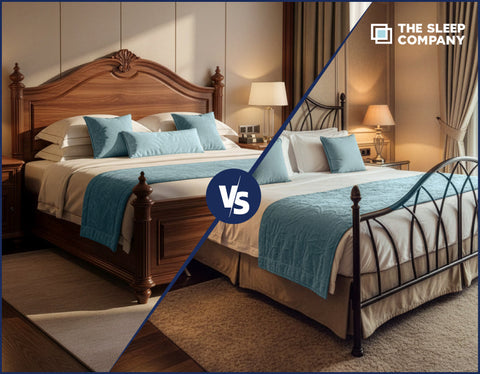
Here's something most people don't think about: your bed frame isn't just holding up your mattress -...
Read More
You've probably had this thought at least once, why does every hotel bed feel amazing while your...
Read More
Your mattress is probably the second-biggest purchase you’ll make after a car or home, somewhere between ₹15,000...
Read More
Your mattress collects roughly 500 million skin cells every year. Not a typo. That's half a billion...
Read More
What is SmartGRID? A Revolution for the Mattress Industry/Comfort Industry SmartGRID is designed with Japanese Patented Technology...
Read More
A major shift is underway in the mattress sector in India. Most Indians are ditching legacy mattress...
Read More
Do you wake up every morning with a serious dose of back pain? Then, a good orthopedic...
Read More
Queen Vs King Bed: Complete Size Guide for Indian Bedrooms Choosing between a queen bed vs king...
Read More
The 2025 GST overhaul brings clarity and efficiency to Indias tax landscape, placing mattresses squarely under the...
Read More
Which Mattress is Good for Health? Discover Several Benefits and How to Choose the Right One Do...
Read More
Soft, Medium or Firm Mattress (2025), Which is Best For You? Most people discover their mattress firmness...
Read More
Choosing the best mattress in India isn’t as simple as it seems. We get it! With countless...
Read More