
My Cart
Order Note


Mattress

Recliner Sofa

Chair

Desk

Elite Sofa

Massager

Recliner Bed

Pillows

Cushions

Bedding
Mattress
Recliner Bed
Recliner Sofa
Elite Sofa
Chair
Desk
Bedding
Pillow & Cushion
Massager
Mattress
Pillow & Cushion
Chair
Desk
Recliner Sofa
Recliner Bed
Elite Sofa
Bedding
Massager
Talk to Us
Get Help Choosing the Right Product

Stores near you
Find and visit our experience stores
Request a call back
Talk to our experts about our products
Comfort Quiz
Get a chance to win a free recliner!


My Cart


Most adult children notice the signs long before their parents do. A parent who used to sleep through the night now complains about waking up at 3 AM. Back pain that was occasional has become daily and shows up before breakfast. The sofa in the living room has become a preferred sleeping spot over the actual bed. These are not simply signs of ageing. Most of the time they are the clearest signs you need a new mattress, and the mattress in question may be one the household has been using for the better part of a decade.
The relationship between mattress quality and physical discomfort becomes more direct as the body ages. Joints that carried a certain level of misalignment at 40 without consequence begin registering that same misalignment as pain at 65. The lumbar spine loses some of its natural cushioning across decades, which means an unsupportive sleeping surface that went unnoticed for years starts generating morning stiffness that does not clear quickly. The hidden health risks of sleeping on an old mattress are particularly relevant for older adults because the body's ability to compensate for poor support diminishes over time.
This is one of the most consistent patterns in the signs you need a new mattress discussion that applies specifically to older sleepers: the body has changed, and a SmartGRID® mattress adapts to those changes where an ageing foam surface no longer can. In practice, this means a mattress that was appropriate at purchase may no longer be appropriate now, independent of how old it is. For parents in their sixties and seventies, the overnight recovery window is shorter and the physical consequences of poor support accumulate faster. A mattress that takes the spine slightly out of neutral alignment for eight hours is, for a younger body, a minor inconvenience. For an older body, it is a compounding stress that shows up as morning stiffness, hip soreness, or a persistent fatigue that has been attributed to every cause except the most obvious one. This is worth raising as a question the next time a parent complains about morning discomfort.
Visible sagging in the middle of the mattress is one of the clearest signs you need a new mattress, and it is also the sign most often dismissed because the sagging happens gradually and the sleepers adjust their position around it without consciously registering that they are doing so. A mattress that dips by more than 3 to 4 centimetres at the primary sleep zone no longer provides adequate spinal support regardless of its original firmness rating. The body impression that does not recover when the sleeper gets out of bed in the morning is the definitive test: press both hands into the sleeping surface and release. A surface still adequately supporting springs back. A surface that remains depressed has permanently compressed past the point of adequate support. The guide on signs your mattress is causing back pain covers this compression test and the other physical indicators in more detail.
Lumps, uneven surface texture, and the perception of springs or coils through the comfort layer are additional indicators. In older coir and Bonnell spring mattresses common in Indian households from the previous decade, spring fatigue eventually produces a surface that creates pressure points rather than relieving them, which is the opposite of what a mattress is supposed to do during sleep.

Physical changes to the mattress are observable from the outside. The sleep and health signs are things parents may not associate with the mattress at all, which is often where adult children notice a pattern before the parent does.
Persistent morning back or hip pain that improves after 30 to 45 minutes of being upright is the most reliable indicator. Pain that is worst immediately on waking, then gradually eases as the body moves around, typically traces to the sleeping surface rather than to chronic disease or activity-related strain. The mattress has held the body in a position of mechanical disadvantage for eight hours; it takes that long for the surrounding muscles and joints to release the compensation they have been holding through the night. Recognising these signs you need a new mattress early, rather than after months of accumulated discomfort, is the more practical approach.
Worsening allergy symptoms with no clear cause, particularly symptoms that are worst in the morning and improve through the day, often trace to dust mite and allergen accumulation within the mattress material. Older mattresses, especially coir and foam constructions, accumulate biological debris within their internal layers over years that no surface cleaning addresses. For parents with asthma or rhinitis, this accumulation can meaningfully worsen respiratory symptoms overnight. Increased tossing and turning, difficulty finding a comfortable position, and frequent waking during the night are also signs worth examining in the context of the sleeping surface. When to replace mattress becomes most relevant precisely at this stage: the sleeper is spending more active effort managing their position through the night than they were a year or two ago.
When should you replace your mattress is a question with a material-dependent answer. Memory foam mattresses average seven to eight years before compression at the primary sleep zone becomes permanent. Coir and basic foam combinations deteriorate faster under daily use, particularly in humid climates, and should be assessed from around five to six years of use. Pocketed spring mattresses with carbon-tempered coils hold up for ten to twelve years when well-supported. For parents who cannot recall when the current mattress was purchased, the mattress age question can often be answered indirectly: if the household moved into the current home more than eight years ago and the mattress came with it, the answer to when should you replace a mattress is probably now rather than a year from now. A mattress that has served past its material lifespan is not going to improve with additional time.
One sign that is consistently underappreciated: if a parent reliably sleeps better at a relative's home, in a hotel, or in any other bed than they do in their own, this is not a coincidence or a change in routine. It is the body's response to a different and better-supported sleeping surface. This observation often gets attributed to the unfamiliarity theory. The opposite is actually more common for most adults. Unfamiliar environments typically produce lighter, less restorative sleep, not better sleep. A parent who consistently wakes more rested after sleeping away from home is providing a reliable signal about the adequacy of their usual sleeping surface. Understanding how often should you change mattresses is partly about paying attention to exactly this kind of indirect evidence, which the 7 benefits of a good mattress guide addresses from a health-outcome perspective.
Once the decision to replace is made, selecting the right option for an older adult's specific requirements is the next step. For most older adults, medium-firm to firm with zoned orthopedic support is the appropriate direction. The specific requirement for elderly sleepers is not simply firmness but firmness that varies by body zone: firmer support under the lower back and hips where the heaviest load sits, with enough surface give at the shoulder and hip contact points to prevent the pressure concentration that interrupts sleep and circulation. An orthopaedic mattress with a structured support layer addresses this by design. The guide on what type of mattress is best for lower back pain covers the relevant construction details for this specific use case.
A 100-night trial period matters particularly when buying for an older adult. The body takes four to six weeks to adapt to a new sleeping surface, and initial impressions in the first week are rarely representative of the long-term experience. A trial period long enough to cover the adaptation window is the only reliable way to confirm the mattress is correct before the return window closes. For parents with chronic lower back stiffness specifically, the Smart Ortho mattress provides zoned support certified by the All India Health Association, with a 10-year warranty and the 100-night trial. It is built around the precise requirements that older adults need: variable firmness by body zone, orthopaedic support layer, and adaptive cushioning that prevents pressure point buildup through the night.
The clearest signs you need a new mattress include visible sagging or dips at the primary sleep zone that do not recover when the mattress is unloaded, persistent morning back or hip pain that clears within an hour of being upright, worsening allergy or respiratory symptoms that are worst on waking, and increased sleep disturbance or tossing and turning. If the mattress is older than eight years or the purchase date is unknown, assessing these signs is the practical starting point.
When should you replace a mattress for an older adult is partly a material-age question and partly a symptom question. Memory foam should be assessed after seven to eight years; coir and basic foam after five to six; pocketed spring after ten to twelve. Independent of age, any mattress that shows visible compression at the primary sleep zone, or that consistently produces morning pain in the sleeper, should be replaced regardless of its age. For older adults, the physical consequences of poor support accumulate faster than for younger sleepers, which is why earlier rather than later is the more practical approach.
The general answer to how often should you change mattresses is every seven to ten years. For older adults, the practical answer is more nuanced: any mattress that produces consistent morning pain, visible wear, or worsening allergy symptoms should be replaced earlier than the calendar suggests. Older adults typically have less physical resilience to absorb the effects of poor spinal support overnight, which means the functional lifespan of a mattress for an elderly sleeper is often shorter in practice than the material lifespan would suggest.
Yes, and the mechanism is direct. A mattress that has sagged at the primary sleep zone holds the spine in a laterally flexed position for eight hours. For a younger body, the surrounding muscles compensate adequately. For an older body with reduced muscular and disc resilience, this overnight misalignment produces the morning stiffness and lower back pain that is among the most common and most underdiagnosed symptoms of mattress failure in older adults.
Medium-firm to firm with zoned orthopaedic support is the appropriate starting point. The specific construction requirement is variable firmness by body zone: firmer under the lower back and hips, with adequate surface give at the shoulder and outer hip to prevent pressure concentration. Adaptive polymer grid or orthopaedic foam layers that provide this zone-specific response are more effective than uniform firmness.
About the Author
Gursheen Kaur Gill is a physiotherapist with 2+ years of experience. Her areas of expertise include postural Correction, Spine & Lumbar Health, Pain Management and workplace ergonomics.
Written by Dr. Gursheen Kaur Gill


Workouts challenge your body in the best possible way. Whether you are strength training, running, cycling or...
Read More
Written by Dipti Mestry Pregnancy can bring many wonderful changes, but it can also bring a few...
Read More
Written by Dr. Aishwarya Panchal One of the most common assumptions I hear from patients with back...
Read More
Most people shopping for a new mattress in India right now compare two very different surface categories....
Read More
Buying a new mattress and realising the size is wrong is one of the most avoidable life...
Read More
Most mornings the ache between your shoulders or lower back fades by mid-morning and you chalk it...
Read More
Three mornings of waking up stiff and most people start blaming the gym, the commute, or how...
Read More
There is a surface in almost every Indian home pressed against the body for seven or eight...
Read More
Most people press down on a few mattresses in a showroom for ten minutes and spend the...
Read More
Waking up with a stiff back, a numb shoulder, or that dull ache below the hips does...
Read More
Picture a household in a coastal Indian city where one family member starts waking up congested every...
Read More
Spring mattresses are the common choice across most Indian households and have been for decades. They are...
Read More
Walk through any Indian apartment building between May and August and the pattern is identical from floor...
Read More
The bed frame size printed on a purchase receipt is often the only number a buyer brings...
Read More
Most people buying a mattress spend more time testing surface feel than thinking about what the sleeping...
Read More
Walk into most Indian homes and ask about the mattress, and the answer follows a familiar pattern:...
Read More
Walk into any mid-size Indian city's furniture market and the inventory looks roughly the same as it...
Read More
Most Indian households buy a new mattress when the old one becomes obviously unusable a visible sag,...
Read More
Indian summer nights are not simply warm they are a specific combination of heat above 35°C, relative...
Read More
Walk into any furniture showroom and ask about the best mattress for kids, and the answer almost...
Read More
Your kid sleeps more than you do. Ten to twelve hours daily for school-age children. During...
Read More
What Is an Orthopedic Mattress? Quick Answer: An orthopedic mattress is a sleep surface specifically designed for...
Read More
Memory foam changed how people think about mattresses. The material moulds to body shape in ways traditional...
Read More
Queen Size Mattress Dimensions Quick Answer: The standard queen size mattress dimension in India is 72 x...
Read More
Cooling Mattress Topper: Technologies, Types and How to Choose Memory foam mattress owners in India report sleeping...
Read More
Most couples don't realize their sleep problems stem from their mattress until one partner starts waking up...
Read More
A 68-year-old man complained about his back for three years straight. Three years. His family tried everything,...
Read More
Which Mattress Is Good for Health: Your Complete Guide to Peaceful Sleep in 2026 Most people spend...
Read More
Best Cooling Mattress for Hot Sleepers in India Walk through any Indian apartment building between May and...
Read More
MS Dhoni is not just your average Indian cricketer. Loved from all the corners of the nation,...
Read More
MS Dhoni’s Sleep Routine and the Meaning Behind ‘8’ MS Dhoni’s quiet decision to swap his jersey...
Read More
Waking up with a stiff back ruins your entire day, doesn't it? You drag yourself out of...
Read More
Latex vs Memory Foam Mattress: Which Is Better for Back Pain? It's already midnight. You are tossing...
Read More
What Is a Mattress Topper? Benefits, Types & How to Choose the Best One in India Your...
Read More
Foam Mattress vs Spring Mattress: Which Mattress Type Suits You Best? Your mattress affects your sleep quality...
Read More
Tips for Choosing the Right Mattress for Old People: A Complete Guide A 68-year-old man complained about...
Read More
Choosing the right mattress size affects your sleep quality more than most people realise especially in Indian...
Read More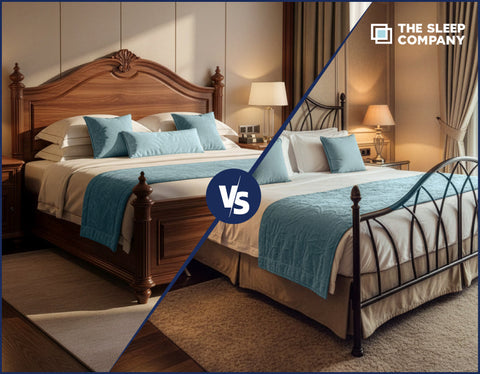
Here's something most people don't think about: your bed frame isn't just holding up your mattress -...
Read More
You've probably had this thought at least once, why does every hotel bed feel amazing while your...
Read More
Your mattress is probably the second-biggest purchase you’ll make after a car or home, somewhere between ₹15,000...
Read More
Your mattress collects roughly 500 million skin cells every year. Not a typo. That's half a billion...
Read More
What is SmartGRID? A Revolution for the Mattress Industry/Comfort Industry SmartGRID is designed with Japanese Patented Technology...
Read More
A major shift is underway in the mattress sector in India. Most Indians are ditching legacy mattress...
Read More
Do you wake up every morning with a serious dose of back pain? Then, a good orthopedic...
Read More
Queen Vs King Bed: Complete Size Guide for Indian Bedrooms Choosing between a queen bed vs king...
Read More
The 2025 GST overhaul brings clarity and efficiency to Indias tax landscape, placing mattresses squarely under the...
Read More
Which Mattress is Good for Health? Discover Several Benefits and How to Choose the Right One Do...
Read More
Soft, Medium or Firm Mattress (2025), Which is Best For You? Most people discover their mattress firmness...
Read More
Choosing the best mattress in India isn’t as simple as it seems. We get it! With countless...
Read More