
My Cart
Order Note


Mattress

Recliner Sofa

Chair

Desk

Elite Sofa

Massager

Recliner Bed

Pillows

Cushions

Bedding
Mattress
Recliner Bed
Recliner Sofa
Elite Sofa
Chair
Desk
Bedding
Pillow & Cushion
Massager
Mattress
Pillow & Cushion
Chair
Desk
Recliner Sofa
Recliner Bed
Elite Sofa
Bedding
Massager
Talk to Us
Get Help Choosing the Right Product

Stores near you
Find and visit our experience stores
Request a call back
Talk to our experts about our products
For your New Home
Find the perfect mattress - chat now


My Cart


Most people discover their mattress firmness is wrong only after weeks of poor sleep. The 60 kg side sleeper needs something completely different from the 90 kg back sleeper—yet both might walk into a store asking for "something comfortable."
Mattress firmness directly affects spinal alignment, pressure point relief, and sleep quality. Testing across body types shows that mismatched firmness causes 23% more tossing and turning throughout the night. For the Indian market specifically, where body weights and sleep preferences vary dramatically, understanding the mattress firmness scale becomes essential before making a purchase. Your ideal firmness depends on three interconnected factors: body weight distribution, preferred sleeping position, and any existing pain conditions. A 75 kg combination sleeper with occasional lower back stiffness has vastly different requirements than a 55 kg dedicated side sleeper. This guide breaks down exactly which type of mattress is best for your body—with specific recommendations you can actually use.
The mattress firmness scale runs from 1 to 10 — but here's what most guides won't tell you: almost no mattress actually scores below 3 or above 9. Extremely soft beds lack structural integrity, while concrete-hard surfaces serve no practical sleeping purpose.
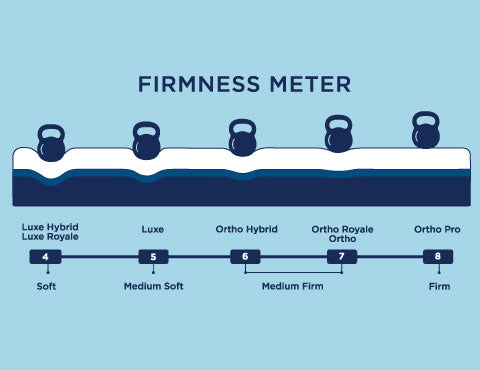
What does each number actually feel like?
The critical insight: Your perceived firmness changes based on body weight. A mattress rated 6/10 feels noticeably softer to someone weighing 95kg compared to someone at 55kg — the heavier person compresses deeper into the comfort layers, reaching the firmer support base underneath.

A soft mattress scores between 3 and 4 on the firmness scale—anything below 3 exists mostly in theory. These beds use lower-density foams or plush comfort layers that compress 2-3 inches under typical body weight, creating that "hugged by the bed" sensation.
The construction differs fundamentally from firmer options. Soft mattresses incorporate thicker comfort layers (typically 3-4 inches) with densities between 30-40 kg/m³, compared to 50-60 kg/m³ in firm alternatives.
Though everyone loves to sleep on soft mattresses, for some people, they are just perfect. Let’s take a look at for whom soft mattresses are best for.
One of the perks of buying a soft mattress is that it provides excellent cushioning comfort. The fluffier and low-density texture of the soft mattress keeps you comfortable without any hardness.
The softness further helps create no pressure zone for narrower body parts like the neck, shoulder, and hips, reducing stiffness and pain.
Another benefit of a soft mattress is that it provides a cozy and warm surface to sleep on. The sinkage of the mattress helps cradle the body, which creates a warmer feeling that protects the sleeper from the cold to some extent.
The major downside of a soft mattress is that it easily sags and sinks. Thus, making it impractical for heavyweight sleepers. Soft mattresses fail to provide support heavyweight sleepers like firm mattresses do; therefore, it’s better to use firm mattresses for heavyweight individuals.
Another drawback of a soft mattress is that it gets compressed under body weight and further fails to provide proper support to the spinal curve. Back sleepers find it hard to sleep on soft mattresses as they feel pressure on their lower back, further enhancing back pain. Also, stomach sleepers find it hard to breathe due to excessive sinking in soft mattresses.

A medium-firm mattress is a mattress that is neither too soft nor too hard. It is the perfect balance of comfort and support. Medium mattress scores 5 to 6.5 on the firmness scale of 1 to 10.
These mattresses have medium density and compression, which make them softer like soft mattresses, and responsive to pressure like firm mattresses.
Medium firm mattresses are most popular amongst people as they serve the best of both worlds; that is, comfort like a soft mattress and support like a firm mattress. However, just like soft mattresses, medium-firm mattresses also suit some people better than others. Let’s take a look at which medium firm mattress is best for.
Plus point of a medium-firm mattress is that it’s suitable for almost every sleeping position. The hardness of the mattress suits side sleepers and combination sleepers since it does not sink or remain overly firm. The optimal density of the mattress also makes it comfortable for more than two people who sleep in different positions.
Another benefit of medium-firm mattresses is that they provide comfort and support, simultaneously fulfilling the terms of soft or firm mattresses. Also, its sturdiness makes it suitable for average-weight people as they do not overly sink in the bed nor remain uprooted.
Medium-firm mattresses, like soft mattresses, have a sinking tendency, which is why medium-firm beds are not ideal for heavier persons.
Another drawback of medium-firm mattresses is that if a person is suffering from existing back pain, then the sinking feature might cause more problems for spinal alignment and enhance back pain.
The Smart Ortho mattress delivers medium-firm support with Patented SmartGRID Technology—firm beneath the back for spinal alignment, softer beneath shoulders and hips for pressure relief. It's AIHA-certified for orthopedic support.

A firm mattress scores 7 to 9 on the firmness scale—providing a supportive surface with minimal sinkage. Under typical body weight, compression stays below 1.5 inches. Under heavier loads (100kg+), the surface compresses slightly more but maintains structural integrity throughout the night.
The difference between a firm mattress and soft mattress becomes immediately apparent: you sleep on a firm mattress rather than in it. The support comes from resistance rather than contouring. Construction priorities shift entirely at this firmness level. High-density foams (60-80 kg/m³), reinforced coil systems, or coir-based cores replace the plush comfort layers found in softer alternatives. Comfort comes from surface quilting and thin cushioning rather than deep foam layers.
Firm mattresses have harder surfaces compared to soft or medium firm mattresses. Let’s look at whom firm mattresses are suitable for:
The most significant benefit of a firm mattress is that its solid surface keeps the sleeper on the bed, which reduces overheating caused due to cradling. Also, blood circulation can slow down while sleeping and cause body pain if the body is restricted from free movement. But a Firm mattress allows free movements on harder surfaces and further continuing normal blood circulation.
Another advantage of a firm mattress is that it doesn’t sink under pressure allowing heavy-weight people to sleep comfortably by providing more support.
Side sleepers face genuine challenges on firm surfaces. Without adequate shoulder and hip compression, the spine bends laterally—creating the opposite alignment problem from what firm mattresses solve for back sleepers.
A 60kg side sleeper on a firm mattress experiences pressure peaks at shoulders and hips that can exceed comfortable thresholds within 20-30 minutes. The result: frequent repositioning, interrupted sleep cycles, and potential morning soreness.
Lightweight sleepers (under 60kg) often perceive firm mattresses as uncomfortable regardless of sleeping position. Their body weight doesn't engage the comfort layers effectively—they're essentially resting on top of the mattress rather than interacting with it.
The best firm mattress at the Sleep Company is the Smart Ortho Pro mattress. It scales between 8 to 10 in the range of 1 to 10 and provides the best advanced orthopedic support to people with chronic back pain.

Many need clarifications about whether it is better to sleep on hard or soft mattresses. However, it’s entirely based on each individual and their personal preferences. Rather than vague "consider your preferences" advice, here's a systematic approach.
Your body weight determines your baseline firmness requirements. Start with these guidelines:
This baseline assumes back sleeping.
Your sleeping position influences how pressure is distributed. Understanding this helps refine your baseline firmness:
Sharing a bed becomes more complex when partners differ in weight or sleeping position.
Softer mattresses with deeper sinkage increases body contact with heat-retaining materials. If you sleep hot:
SmartGRID mattresses from The Sleep Company are crafted with 2500+ air channels to enhance temperature regulation across all firmness levels.
Online mattresses include trial periods because firmness is subjective. The Sleep Company offers a 100-night trial, giving you enough time to adjust to it and how it feels. A new mattress will always feel different and you should give yourself a few weeks to adapt to it.
Important: New mattresses require 2–4 weeks of adjustment. Initial firmness may feel different from how the mattress feels once it settles and your body adapts. Make your final decision after this adjustment period—not in the first few nights.
The mattress firmness selection depends on three factors working together: your body weight sets the baseline, your sleeping position fine-tunes it, and personal comfort testing confirms the final choice.
For most Indian sleepers in the 60–85kg range, medium-firm mattresses rated 5.5–6.5 offer the ideal balance of comfort and support across various sleeping positions. Heavier individuals should lean toward 7/10 and above, while lighter sleepers typically feel most comfortable around 5/10 or below.
Avoid relying on quick showroom testing. The Sleep Company’s 100-night trial allows a true evaluation in your actual sleeping environment—long enough to cover the 2–4 week adjustment period plus additional weeks of settled use. If the firmness still feels unsuitable after proper adjustment time, exchange options are available.
| Your Profile | Recommended Firmness | Top Pick |
|---|---|---|
| Under 60kg, side sleeper | 4–5/10 (Soft) | Smart Luxe Hybrid |
| 60–80kg, combination sleeper | 6/10 (Medium-Firm) | Smart Ortho |
| 80–100kg, back sleeper | 7/10 (Firm) | Smart Ortho Pro |
| Above 100kg, any position | 7.5–8/10 (Firm+) | Smart Ortho Pro |
| Back pain, any weight | 6–7/10 (Medium-Firm) | Smart Ortho |
Ready to discover your ideal firmness? Explore The Sleep Company’s complete mattress range, offering options across the full firmness spectrum—each featuring patented SmartGRID technology for pressure relief and superior support.
For deeper guidance, browse our complete mattress buying guide or explore targeted solutions for back-pain sufferers.
A soft mattress is designed with plush comfort layers. It’s ideal for side sleepers, lightweight sleepers, and people with chronic pain who need pressure relief.
Soft mattresses provide excellent pressure relief, reduce joint pain, and contour the body for a cozy feel, especially for side sleepers and lighter individuals.
Soft mattresses may lack support for heavier sleepers, sag quickly, and may cause misalignment for back or stomach sleepers.
A medium-firm mattress balances comfort and support. It’s best for combination sleepers, couples, and average-weight individuals who want versatile comfort.
Medium mattresses provide balanced spinal alignment, comfort for most sleep positions, and are suitable for couples with different sleep needs.
Some sleepers may find it neither too soft nor too firm, and lightweight individuals may still need more cushioning.
Firm mattresses are recommended for back and stomach sleepers, people with back pain needing extra support, and heavier individuals.
Firm mattresses may feel uncomfortable for side sleepers, can cause pressure points, and may lack plushness for lighter sleepers.
Your best mattress firmness depends on factors like body weight, sleep position, comfort preference, body heat, and whether you sleep alone or with a partner.
A medium-firm or firm mattress is generally considered best for back pain as it supports spinal alignment while reducing pressure on the lower back.
Side sleepers should choose a soft or medium mattress, as it cushions shoulders and hips while relieving pressure points.
Medium-firm mattresses are the best choice for couples as they balance comfort, motion isolation, and support for different body types.


Workouts challenge your body in the best possible way. Whether you are strength training, running, cycling or...
Read More
Written by Dipti Mestry Pregnancy can bring many wonderful changes, but it can also bring a few...
Read More
Written by Dr. Aishwarya Panchal One of the most common assumptions I hear from patients with back...
Read More
Most people shopping for a new mattress in India right now compare two very different surface categories....
Read More
Buying a new mattress and realising the size is wrong is one of the most avoidable life...
Read More
Most mornings the ache between your shoulders or lower back fades by mid-morning and you chalk it...
Read More
Three mornings of waking up stiff and most people start blaming the gym, the commute, or how...
Read More
There is a surface in almost every Indian home pressed against the body for seven or eight...
Read More
Most people press down on a few mattresses in a showroom for ten minutes and spend the...
Read More
Waking up with a stiff back, a numb shoulder, or that dull ache below the hips does...
Read More
Most adult children notice the signs long before their parents do. A parent who used to sleep...
Read More
Picture a household in a coastal Indian city where one family member starts waking up congested every...
Read More
Spring mattresses are the common choice across most Indian households and have been for decades. They are...
Read More
Walk through any Indian apartment building between May and August and the pattern is identical from floor...
Read More
The bed frame size printed on a purchase receipt is often the only number a buyer brings...
Read More
Most people buying a mattress spend more time testing surface feel than thinking about what the sleeping...
Read More
Walk into most Indian homes and ask about the mattress, and the answer follows a familiar pattern:...
Read More
Walk into any mid-size Indian city's furniture market and the inventory looks roughly the same as it...
Read More
Most Indian households buy a new mattress when the old one becomes obviously unusable a visible sag,...
Read More
Indian summer nights are not simply warm they are a specific combination of heat above 35°C, relative...
Read More
Walk into any furniture showroom and ask about the best mattress for kids, and the answer almost...
Read More
Your kid sleeps more than you do. Ten to twelve hours daily for school-age children. During...
Read More
What Is an Orthopedic Mattress? Quick Answer: An orthopedic mattress is a sleep surface specifically designed for...
Read More
Memory foam changed how people think about mattresses. The material moulds to body shape in ways traditional...
Read More
Queen Size Mattress Dimensions Quick Answer: The standard queen size mattress dimension in India is 72 x...
Read More
Cooling Mattress Topper: Technologies, Types and How to Choose Memory foam mattress owners in India report sleeping...
Read More
Most couples don't realize their sleep problems stem from their mattress until one partner starts waking up...
Read More
A 68-year-old man complained about his back for three years straight. Three years. His family tried everything,...
Read More
Which Mattress Is Good for Health: Your Complete Guide to Peaceful Sleep in 2026 Most people spend...
Read More
Best Cooling Mattress for Hot Sleepers in India Walk through any Indian apartment building between May and...
Read More
MS Dhoni is not just your average Indian cricketer. Loved from all the corners of the nation,...
Read More
MS Dhoni’s Sleep Routine and the Meaning Behind ‘8’ MS Dhoni’s quiet decision to swap his jersey...
Read More
Waking up with a stiff back ruins your entire day, doesn't it? You drag yourself out of...
Read More
Latex vs Memory Foam Mattress: Which Is Better for Back Pain? It's already midnight. You are tossing...
Read More
What Is a Mattress Topper? Benefits, Types & How to Choose the Best One in India Your...
Read More
Foam Mattress vs Spring Mattress: Which Mattress Type Suits You Best? Your mattress affects your sleep quality...
Read More
Tips for Choosing the Right Mattress for Old People: A Complete Guide A 68-year-old man complained about...
Read More
Choosing the right mattress size affects your sleep quality more than most people realise especially in Indian...
Read More
Here's something most people don't think about: your bed frame isn't just holding up your mattress -...
Read More
You've probably had this thought at least once, why does every hotel bed feel amazing while your...
Read More
Your mattress is probably the second-biggest purchase you’ll make after a car or home, somewhere between ₹15,000...
Read More
Your mattress collects roughly 500 million skin cells every year. Not a typo. That's half a billion...
Read More
What is SmartGRID? A Revolution for the Mattress Industry/Comfort Industry SmartGRID is designed with Japanese Patented Technology...
Read More
A major shift is underway in the mattress sector in India. Most Indians are ditching legacy mattress...
Read More
Do you wake up every morning with a serious dose of back pain? Then, a good orthopedic...
Read More
Queen Vs King Bed: Complete Size Guide for Indian Bedrooms Choosing between a queen bed vs king...
Read More
The 2025 GST overhaul brings clarity and efficiency to Indias tax landscape, placing mattresses squarely under the...
Read More
Which Mattress is Good for Health? Discover Several Benefits and How to Choose the Right One Do...
Read More
Choosing the best mattress in India isn’t as simple as it seems. We get it! With countless...
Read More