
My Cart
Order Note


Mattress

Recliner Sofa

Chair

Desk

Elite Sofa

Massager

Recliner Bed

Pillows

Cushions

Bedding
Mattress
Recliner Bed
Recliner Sofa
Elite Sofa
Chair
Desk
Bedding
Pillow & Cushion
Massager
Mattress
Pillow & Cushion
Chair
Desk
Recliner Sofa
Recliner Bed
Elite Sofa
Bedding
Massager
Talk to Us
Get Help Choosing the Right Product

Stores near you
Find and visit our experience stores
Request a call back
Talk to our experts about our products
Comfort Quiz
Get a chance to win a free recliner!


My Cart


Most people spend about eight hours every night on their mattress — that's roughly 3,000 hours a year. Yet when back pain shows up or sleep quality drops, the mattress rarely gets blamed. Strange, isn't it?
Your mattress affects more than just comfort. It influences spinal alignment, pressure distribution, temperature regulation, and even mental wellbeing. The right mattress can significantly reduce body pressure compared to conventional foam options. That translates to mornings without stiffness and days with better focus.
So which mattress is good for health? The answer depends on your body weight, sleep position, and specific health needs — but some features matter for everyone. Proper spinal support, breathable materials, and pressure relief top the list.
Sleep isn't just about feeling rested. During those 7–9 hours, your body repairs muscle tissue, consolidates memories, and regulates hormone production. A mattress that doesn't support your spine properly disrupts these processes.
People sleeping on poor-quality mattresses experience noticeably more sleep disruptions. That means extra tossing and turning each night — multiplied across weeks and months, the effects compound dramatically.
Physical health connections: When your mattress fails to maintain neutral spine alignment, muscles work overtime compensating for the lack of support. Pressure builds at contact points. Blood circulation slows where compression occurs. Over months, this develops into chronic issues — particularly in the lower back, hips, and shoulders.
The 7 benefits of a good mattress extend beyond just physical comfort. Improved sleep quality affects productivity levels, emotional regulation, and even immune function. Worth noting though — these benefits only materialise when the mattress actually fits your needs.
Mental and cognitive effects: Sleep deprivation triggered by an uncomfortable mattress affects cognitive performance more than most realise. Office workers using substandard mattresses often show lower concentration scores and increased irritability. The connection? Poor sleep fragments REM cycles, which are critical for emotional processing and memory formation.
Walk into any mattress store and you'll face dozens of options. Memory foam, latex, spring, hybrid, and newer innovations like grid technology. Each works differently based on materials and construction.
Firmness isn't just about personal preference — it's about physics. Your body weight determines how much you compress mattress materials. Sleep position affects which body parts need cushioning versus support.

Certain health issues demand particular attention when selecting a mattress. Generic advice doesn't work here — you need targeted solutions.
The Smart Ortho mattress addresses back pain through zoned support and medium-firm construction. It provides cushioning at pressure points while maintaining spinal alignment.
Clinical observations show individuals with lower back pain benefit most from mattresses that support the lumbar curve. Too soft allows sagging; too firm creates pressure points. The goal is maintaining the spine's natural S-curve throughout the night.
Don't overlook pillow selection either — the cervical pillow works in conjunction with your mattress to keep the cervical spine properly aligned. Neck and lower back problems often connect.
Arthritis sufferers need pressure relief at multiple points. Conventional firm mattresses can aggravate joint inflammation by creating pressure concentrations.
Materials that contour to body shape — while still providing support — help distribute weight more evenly. This reduces stress on inflamed joints without sacrificing spinal alignment. The key balance? Cushioning at contact points with firm support for the skeletal structure.
Dust mites, mould, and allergen accumulation in mattresses can trigger respiratory problems for sensitive individuals. Materials matter significantly here.
Hypoallergenic mattresses use materials that resist dust mite colonisation. Our mattresses are made of Patented SmartGRID Technology (a type of food-grade and non-toxic hyper-elastic polymer) which is naturally resistant to allergen buildup. Traditional foam and spring mattresses designed with fabric covers provide more hospitable environments for dust mites.
Regular cleaning helps, but material selection provides the first line of defence. Look for mattresses specifically marketed as hypoallergenic if you have allergies or asthma.
Some people naturally sleep hot due to metabolism or hormonal factors. Others experience temperature regulation issues due to medical conditions or medications.
The SnowTec Cooling Mattress incorporates cooling technology designed to reduce skin temperature during sleep. It maintains an extended cooling effect throughout the night using advanced enhancements for optimal airflow design.
If you wake up sweaty or kick off the covers repeatedly, temperature regulation should be your top priority. No amount of support matters if discomfort prevents deep sleep.
Beyond mattress type and firmness, specific features determine whether a mattress genuinely supports health or just markets well.
Showroom testing provides limited insight. Five minutes lying down doesn't replicate eight hours of sleep. Still, you can gather useful information with the right approach.
The Sleep Company's 100-night trial lets you test under real sleep conditions. Morning stiffness should decrease, not increase. If back pain worsens after three weeks, the mattress doesn't suit your needs.
Even the best mattress degrades without proper care. Maintenance extends lifespan and preserves health benefits.
Choosing which mattress is good for health comes down to matching features to your specific needs. No universal "best" mattress exists — only the best mattress for you.
Start by assessing your situation honestly. Where are your current pain points located? What are your sleep position preferences? What are your temperature regulation needs? What are your budget constraints? These factors narrow the field considerably.
Don't rush the decision. A mattress affects your health for years — spending extra time researching and testing options pays dividends in sleep quality and physical wellbeing.
Final recommendations: Test mattresses in person if possible — lie in your actual sleep position for 15+ minutes. Utilise trial periods — most quality brands offer 100+ night trials because they know adaptation takes time. Prioritise brands with strong warranties (10+ years indicates confidence in durability). And remember: the marketing claims matter less than how the mattress performs for your body and sleep patterns.
Your mattress represents one of the most important health investments you'll make. Choose wisely, maintain it properly, and it'll support your wellbeing every single night for years to come.
Ready to experience better sleep? Explore The Sleep Company's complete mattress collection designed with Patented SmartGRID Technology for optimal health and comfort.


Workouts challenge your body in the best possible way. Whether you are strength training, running, cycling or...
Read More
Written by Dipti Mestry Pregnancy can bring many wonderful changes, but it can also bring a few...
Read More
Written by Dr. Aishwarya Panchal One of the most common assumptions I hear from patients with back...
Read More
Most people shopping for a new mattress in India right now compare two very different surface categories....
Read More
Buying a new mattress and realising the size is wrong is one of the most avoidable life...
Read More
Most mornings the ache between your shoulders or lower back fades by mid-morning and you chalk it...
Read More
Three mornings of waking up stiff and most people start blaming the gym, the commute, or how...
Read More
There is a surface in almost every Indian home pressed against the body for seven or eight...
Read More
Most people press down on a few mattresses in a showroom for ten minutes and spend the...
Read More
Waking up with a stiff back, a numb shoulder, or that dull ache below the hips does...
Read More
Most adult children notice the signs long before their parents do. A parent who used to sleep...
Read More
Picture a household in a coastal Indian city where one family member starts waking up congested every...
Read More
Spring mattresses are the common choice across most Indian households and have been for decades. They are...
Read More
Walk through any Indian apartment building between May and August and the pattern is identical from floor...
Read More
The bed frame size printed on a purchase receipt is often the only number a buyer brings...
Read More
Most people buying a mattress spend more time testing surface feel than thinking about what the sleeping...
Read More
Walk into most Indian homes and ask about the mattress, and the answer follows a familiar pattern:...
Read More
Walk into any mid-size Indian city's furniture market and the inventory looks roughly the same as it...
Read More
Most Indian households buy a new mattress when the old one becomes obviously unusable a visible sag,...
Read More
Indian summer nights are not simply warm they are a specific combination of heat above 35°C, relative...
Read More
Walk into any furniture showroom and ask about the best mattress for kids, and the answer almost...
Read More
Your kid sleeps more than you do. Ten to twelve hours daily for school-age children. During...
Read More
What Is an Orthopedic Mattress? Quick Answer: An orthopedic mattress is a sleep surface specifically designed for...
Read More
Memory foam changed how people think about mattresses. The material moulds to body shape in ways traditional...
Read More
Queen Size Mattress Dimensions Quick Answer: The standard queen size mattress dimension in India is 72 x...
Read More
Cooling Mattress Topper: Technologies, Types and How to Choose Memory foam mattress owners in India report sleeping...
Read More
Most couples don't realize their sleep problems stem from their mattress until one partner starts waking up...
Read More
A 68-year-old man complained about his back for three years straight. Three years. His family tried everything,...
Read More
Best Cooling Mattress for Hot Sleepers in India Walk through any Indian apartment building between May and...
Read More
MS Dhoni is not just your average Indian cricketer. Loved from all the corners of the nation,...
Read More
MS Dhoni’s Sleep Routine and the Meaning Behind ‘8’ MS Dhoni’s quiet decision to swap his jersey...
Read More
Waking up with a stiff back ruins your entire day, doesn't it? You drag yourself out of...
Read More
Latex vs Memory Foam Mattress: Which Is Better for Back Pain? It's already midnight. You are tossing...
Read More
What Is a Mattress Topper? Benefits, Types & How to Choose the Best One in India Your...
Read More
Foam Mattress vs Spring Mattress: Which Mattress Type Suits You Best? Your mattress affects your sleep quality...
Read More
Tips for Choosing the Right Mattress for Old People: A Complete Guide A 68-year-old man complained about...
Read More
Choosing the right mattress size affects your sleep quality more than most people realise especially in Indian...
Read More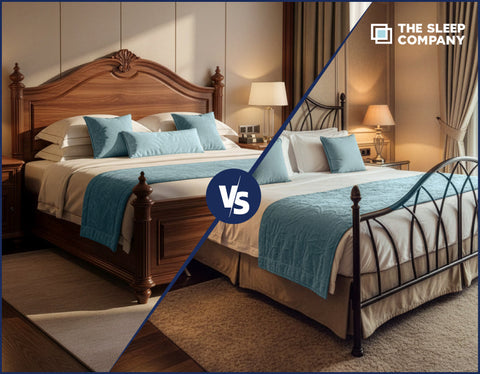
Here's something most people don't think about: your bed frame isn't just holding up your mattress -...
Read More
You've probably had this thought at least once, why does every hotel bed feel amazing while your...
Read More
Your mattress is probably the second-biggest purchase you’ll make after a car or home, somewhere between ₹15,000...
Read More
Your mattress collects roughly 500 million skin cells every year. Not a typo. That's half a billion...
Read More
What is SmartGRID? A Revolution for the Mattress Industry/Comfort Industry SmartGRID is designed with Japanese Patented Technology...
Read More
A major shift is underway in the mattress sector in India. Most Indians are ditching legacy mattress...
Read More
Do you wake up every morning with a serious dose of back pain? Then, a good orthopedic...
Read More
Queen Vs King Bed: Complete Size Guide for Indian Bedrooms Choosing between a queen bed vs king...
Read More
The 2025 GST overhaul brings clarity and efficiency to Indias tax landscape, placing mattresses squarely under the...
Read More
Which Mattress is Good for Health? Discover Several Benefits and How to Choose the Right One Do...
Read More
Soft, Medium or Firm Mattress (2025), Which is Best For You? Most people discover their mattress firmness...
Read More
Choosing the best mattress in India isn’t as simple as it seems. We get it! With countless...
Read More