
My Cart
Order Note


Mattress

Recliner Sofa

Chair

Desk

Elite Sofa

Massager

Recliner Bed

Pillows

Cushions

Bedding
Mattress
Recliner Bed
Recliner Sofa
Elite Sofa
Chair
Desk
Bedding
Pillow & Cushion
Massager
Mattress
Pillow & Cushion
Chair
Desk
Recliner Sofa
Recliner Bed
Elite Sofa
Bedding
Massager
Talk to Us
Get Help Choosing the Right Product

Stores near you
Find and visit our experience stores
Request a call back
Talk to our experts about our products
Comfort Quiz
Get a chance to win a free recliner!


My Cart


Do you wake up with a stiff back? Toss and turn throughout the night, drenched in sweat? Do you experience that groggy, unrested feeling that follows you through your morning coffee and well into the afternoon?
If this sounds familiar, you’re not alone.
Many Indians are struggling with inadequate sleep; the culprit isn't stress or late-night scrolling, it's what they're sleeping on. A mattress does far more than cushion your body for 7-8 hours. It determines whether those hours restore you or leave you more depleted than before.
The question “which mattress is good for health” deserves more than a simple brand recommendation. Different bodies need different things. A 28-year-old athlete with no health concerns has vastly different requirements than a 55-year-old managing chronic back pain. Side sleepers need something entirely different from back sleepers. And someone in Chennai's humid climate faces challenges that a Delhi resident in January simply doesn't encounter.
This guide breaks down everything: the genuine health benefits of quality mattresses, which mattress types address specific conditions, and how to identify what your body actually needs. No generic advice. Just practical guidance backed by sleep science and real-world testing.

A mattress good for health doesn't just feel comfortable—it actively contributes to physical recovery, mental clarity, and long-term wellbeing. Here's what the right mattress delivers:
Sleep quality trumps sleep quantity. Eight hours of fragmented, uncomfortable sleep leaves you worse off than six hours of deep, uninterrupted rest.
Research from the National Sleep Foundation shows that people sleeping on a supportive mattress will fall asleep 23 minutes faster and experience 42% fewer nighttime awakenings. Those numbers matter. Each time you wake—even briefly—your body restarts sleep cycles rather than progressing into the deeper stages where physical restoration happens.
The Sleep Company's Patented SmartGRID® Technology mattresses address this, with 2,500+ air channels in the hyper-elastic polymer grid. Unlike memory foam that creates heat pockets or springs that transfer motion, the grid adapts to movement without disruption. Couples particularly notice this—one partner shifting position doesn't ripple across to wake the other.
Your spine compresses by roughly 1-2 centimetres throughout the day as gravity works on spinal discs. Night-time is when those discs rehydrate and recover—but only if your sleeping surface maintains proper alignment.
Picture this: on a mattress that's too soft, your hips sink excessively, creating an unnatural curve in your lower back. Too firm, and your shoulders and hips bear pressure while your lumbar region lacks support. Both scenarios trigger muscle compensation. Your body essentially works overtime during what should be rest, explaining that morning stiffness many people dismiss as "just how I wake up."
The Smart Ortho Pro mattress tackles this through 5-zone orthopedic support—different firmness levels for head/neck, shoulders, lower back, hips, and legs. The All India Health Association (AIHA) certified this mattress specifically for spinal alignment and back pain relief after testing.
Back pain affects nearly 1 in 2 Indian adults at some point. According to a 2022 systematic review published in PubMed analysing 97 studies, the point prevalence of low back pain in India is 48%—significantly higher than global averages. Sedentary work, long commutes, and poor posture contribute, but mattresses play a larger role than most people realise.
An orthopedic mattress good for health works through targeted support rather than uniform firmness. The SmartGRID structure buckles softly under lighter body parts—arms, calves—whilst remaining firm beneath heavier areas like your back and hips. Pressure testing across 1,000+ customers showed significantly lower pressure exertion on SmartGRID compared to memory foam and spring alternatives.
Your sleeping position determines which areas need the most attention. Side sleepers require shoulder and hip cushioning to prevent joint compression. Back sleepers need consistent lumbar support. Stomach sleepers—though this position strains the neck regardless of mattresses—benefit from firmer surfaces preventing lower back hyperextension.
The sleep-mental health connection runs deeper than "feeling tired makes you grumpy." Chronic sleep deprivation alters brain chemistry in measurable ways. Serotonin and dopamine regulation becomes disrupted. Cortisol—the stress hormone—stays elevated even after waking. Emotional resilience diminishes.
Just one week of sleeping 5-6 hours instead of 7-8 produces noticeable changes in anxiety levels. Participants in clinical studies report mood improvements within days of achieving proper rest. Not weeks. Days.
A mattress that eliminates physical discomfort removes barriers to quality sleep. No overheating at 3 AM. No numb shoulders forcing position changes. No pressure points aching by morning. When the body rests comfortably, psychological restoration follows.
Your mattress hosts more than just you. Over years of use, typical mattresses accumulate dust mites, dead skin cells, sweat residue, and potential mould—particularly problematic in India's humid climate. These allergens trigger respiratory issues, skin irritations, and disrupted sleep.
Memory foam, whilst comfortable, traps moisture and creates warm environments where dust mites thrive. Traditional cotton mattresses compress over time, making deep cleaning virtually impossible. Coir can harbour mould during monsoon months.
SmartGRID mattresses use food-grade, hypoallergenic polymers—the same material approved for medical and food-contact applications. The open-grid structure doesn't absorb moisture or provide hospitable environments for allergens. For pregnant women (where respiratory health affects both mother and baby) and infants with developing immune systems, this matters considerably.
Sleep deprivation costs the Indian economy an estimated ₹1.1 lakh crore annually in lost productivity. The connection seems indirect—you're not working while sleeping—but cognitive function depends entirely on proper rest.
During deep sleep stages, your brain consolidates memories, processes information, and clears metabolic waste that accumulates during waking hours. Interrupt this with poor sleep quality, and everything suffers: reaction times, decision-making and creative problem-solving.
Individuals who improve sleep quality report productivity gains of 15-20% within weeks. That's substantial. The difference between meeting deadlines comfortably and constantly playing catch-up.
"Beauty sleep" has scientific backing. During deep sleep, blood flow to the skin increases, delivering oxygen and nutrients whilst removing toxins. Human Growth Hormone—essential for cell regeneration—peaks during quality sleep cycles. Collagen production accelerates.
Chronic poor sleep produces visible consequences: dark circles, deepening fine lines, dull complexion. Research on telomere length (markers of biological ageing) shows that sleep deprivation accelerates cellular ageing.
Your mattress contacts your skin for 6-8 hours nightly. Low-quality fabrics cause friction damaging hair cuticles and creating micro-abrasions on skin. Materials trapping heat increases sweating and potentially clogging pores. Quality covers—like bamboo and cotton-viscose fabrics—wick moisture away and maintain cooler sleeping surfaces.

Not all mattresses suit all people. Understanding how different materials address specific needs helps narrow options to those genuinely appropriate for your situation.
SmartGRID represents the most significant mattress innovation since memory foam's introduction decades ago. The hyper-elastic polymer grid—developed using Patented SmartGRID Technology—delivers something traditional materials cannot: simultaneous softness and firmness without compromise.
Why it works for health: The grid structure adapts instantly. Softer areas buckle to cushion pressure points; firmer sections support the spine. The 2,500+ air channels promote continuous airflow—crucial for temperature regulation. The food-grade polymer resists dust mites and doesn't off-gas chemicals like some foams.
Best suited for: All sleep positions, hot sleepers, couples needing motion isolation, those with back pain or pressure sensitivity. Particularly effective in Indian climates where heat retention becomes problematic.
Explore the full SmartGRID comparison to understand different models.
Natural latex—derived from rubber tree sap—offers exceptional longevity, often lasting 15+ years with proper care. The material provides responsive support with a slightly bouncy feel many sleepers prefer over the "sinking" sensation of memory foam.
Why it works for health: Naturally hypoallergenic and resistant to dust mites, mould, and mildew. Excellent breathability prevents heat buildup. Even weight distribution reduces pressure points. Eco-friendly and biodegradable (natural varieties).
Best suited for: Eco-conscious buyers, allergy sufferers, those preferring responsive rather than conforming surfaces, side and back sleepers.
Limitations: Higher price point than synthetic options. Can feel too firm for some side sleepers without adequate top comfort layers.
Hybrid mattresses combine pocketed spring coils with comfort layers—Patented SmartGRID Technology, latex, or foam. This construction delivers spring support with modern pressure relief.
Why it works for health: Individually wrapped coils provide excellent spinal support without the motion transfer of traditional springs. Enhanced airflow through the coil system suit hot sleepers. Superior edge support compared to all-foam options means no "rolling off" sensation.
Best suited for: Those preferring the traditional mattress bounce with modern comfort, back sleepers, heavier individuals requiring robust support, couples with different firmness preferences.
Originally developed by NASA, memory foam contours closely to body shape. It remains popular for pressure relief, though significant trade-offs exist.
Health considerations: Excellent pressure point relief through body-conforming properties. Good motion isolation for couples.
Drawbacks to consider: Traps heat substantially—problematic for Indian climates. Creates "sinking" sensation restricting movement. Lower-quality versions off-gas volatile organic compounds (VOCs). Typically develops indentations within 5-7 years, losing support.
Honest assessment: Memory foam suits side sleepers in cool climates prioritising pressure relief over temperature regulation. It's genuinely not recommended for hot sleepers or those in humid regions like coastal India.
Traditional spring mattresses use interconnected or pocketed coils for support. They remain popular due to familiarity, bounce, and lower price points.
Health considerations: Firm support suitable for stomach and back sleepers. Excellent breathability through open coil structure.
Drawbacks: Poor motion isolation—movement transfers across the mattress. Pressure points develop at shoulders and hips. Coils sag over time, reducing support quality. Springs can become noisy.
Best for: Budget-conscious buyers, stomach sleepers requiring firm surfaces, those who prefer bouncy rather than conforming mattresses.
Made from coconut fibre, coir mattresses are common across India due to local availability and lower costs. They provide very firm support.
Health considerations: Natural material with initial breathability. Affordable entry point.
Significant drawbacks: Can harbour mould in humid conditions—a real concern during monsoons. Minimal pressure relief; often causes joint discomfort. Compresses and loses firmness relatively quickly. May attract pests if improperly treated.
Honest assessment: Coir suits only those who genuinely prefer very firm surfaces and live in dry climates. Most people find them uncomfortable within months.
| Health Concern | Recommended Type | Reasoning |
|---|---|---|
| Back Pain | SmartGRID Ortho or Hybrid | Targeted zone support with pressure relief |
| Allergies | SmartGRID or Natural Latex | Hypoallergenic, moisture-resistant materials |
| Hot Sleeper | SmartGRID with SnowTec ™ | 2,500+ air channels and SnowTec ™ fabric, keeps you 4-6 degrees cooler, for deeper sleep |
| Joint Pain | SmartGRID or Latex | Even weight distribution, adaptive cushioning |
| Partner Disturbance | SmartGRID or Hybrid | Superior motion isolation |
| Pregnancy | SmartGRID or Latex | Hypoallergenic, supportive, breathable |
Knowing which mattress types exist is one thing. Identifying which suits your specific body is another challenge entirely. These factors narrow options effectively:
Mattress firmness follows a 1-10 scale: 1 being extremely soft, 10 being as hard as the floor. Most people find comfort between 5-7—medium to medium-firm. But individual needs vary considerably.
By body weight:
By sleep position:
By health condition:
The Sleep Company's detailed firmness guide covers specific conditions and sleeping styles in depth.
India's climate includes humid coastlines and hot summers that last most of the year in many regions, monsoon moisture—demands materials that handle heat and humidity effectively.
SmartGRID and latex excel here. Both promote airflow, resist moisture absorption, and don't create the heat pockets that make memory foam uncomfortable by 2 AM on a warm night.
Memory foam struggles considerably in Indian conditions. Even gel-infused versions trap more heat than grid or latex alternatives. The dense structure retains moisture during monsoons, creating hygiene concerns.
Coir handles humidity poorly too—coconut fibre can harbour mould when exposed to moisture, particularly problematic in coastal cities.
Cramped sleeping positions restrict natural movement, increase partner disturbance, and prevent the relaxation needed for deep sleep stages.
Standard Indian sizes:
Those above 6 feet tall should consider queen or king regardless of sleeping alone. Standard lengths may leave feet hanging over edges, disrupting posture throughout the night.
Check the mattress size guide for room measurement tips and specific recommendations. Custom sizes are available for non-standard bed frames.
For families who co-sleep or partners with different schedules wanting minimal disturbance, a king size mattress makes practical sense.
Your body temperature naturally drops by 1-2°C when falling asleep—a physiological requirement for entering deep sleep. Mattresses trapping heat interfere with this process, triggering awakenings, sweating, and restless sleep.
In Indian summers exceeding 35°C, and humidity climbing during monsoons, cooling properties become essential.
What to look for:
What to avoid:
A mattress purchase amortises across years of nightly use. Cheap options requiring replacement every 3-4 years often cost more long-term than a quality mattress, lasting a decade.
Typical lifespans by material:
The Sleep Company offers a 10-year warranty on SmartGRID mattresses—confidence backed by material engineering rather than marketing claims.
Quality sleep transforms health outcomes—from spinal alignment and pain relief to mental clarity and emotional balance. The mattress beneath you determines whether 7-8 hours nightly restore your body or leave you depleted.
When considering which mattress is good for health, the answer depends entirely on your specific situation. Back pain sufferers benefit from orthopedic designs with zone-based support. Hot sleepers require breathable materials with active cooling. Allergy-prone individuals need hypoallergenic constructions resisting dust mites and mould. Side sleepers need different things than back sleepers.
The Sleep Company's Patented SmartGRID® Technology mattress range addresses these varied needs through technology developed by former DRDO scientists—not marketing claims, but engineered solutions tested across thousands of users. The 100-night free trial, 10-year warranty, and no-cost EMI options mean testing whether SmartGRID suits your body carries minimal financial risk.
Your mattress investment compounds across thousands of nights. Choose something that genuinely works for your body, and you'll feel the difference within days—not just in how you sleep, but in how you function during every waking hour.
Explore the complete mattress collection and find what works for you.
SmartGRID and natural latex mattresses offer the strongest health benefits for Indian conditions. SmartGRID's polymer grid adapts to body contours whilst its 2500+ air channels address humidity and heat challenges endemic to Indian climates. Latex provides similar benefits with exceptional 15+ year durability. Memory foam, whilst comfortable initially, causes overheating issues in most Indian weather conditions.
Orthopedic mattresses benefit anyone prioritising spinal health—not exclusively those with existing problems. They provide firmer support maintaining neutral spine alignment during sleep. That said, side sleepers sometimes find pure orthopedic options too firm at shoulders and hips. The solution: orthopedic bases with pressure-relieving top layers, like SmartGRID Ortho models combining firm support with adaptive cushioning.
General recommendation: every 7-10 years, though material quality creates significant variation. Warning signs indicating replacement: visible sagging exceeding 3-4 cm, waking with pain that eases after getting up, noticeable lumps or body impressions, worsening allergy symptoms, or simply sleeping better elsewhere (hotels, guest beds). High-quality Patented SmartGRID Technology and latex often last 10-15 years; lower-quality memory foam may need replacement within 5-6 years.
Medium-firm (5-7 on standard firmness scales) works best for most back pain sufferers. Too soft allows spinal misalignment; too firm creates pressure points. The ideal mattress maintains your spine's natural S-curve whilst cushioning shoulders and hips appropriately. Zone-based support—like 5-zone orthopedic technology—often outperforms uniform firmness for pain management.
Significantly. Mattresses accumulate dust mites, dead skin, and potential mould over time—particularly in humid Indian climates. Hypoallergenic materials like SmartGRID's food-grade polymer and natural latex resist these allergens. They don't absorb moisture, eliminating the damp conditions where dust mites proliferate. If respiratory issues or skin sensitivities affect your sleep, material choice substantially impacts symptom severity.
Memory foam presents genuine challenges in Indian conditions. The material traps heat substantially, causing sleep disturbances during warm months—which span most of the year across much of the country. Dense foam structure retains moisture during monsoons, creating hygiene concerns. Gel-infused versions address heat somewhat but don't match the temperature regulation of SmartGRID or latex. Memory foam suits cool, dry climates better than typical Indian conditions.
Several warning signs indicate mattress-related health impacts: waking with stiffness or pain that eases within 30-60 minutes of getting up; sleeping noticeably better in hotels or other beds; visible sagging or body impressions; worsened allergy symptoms at night; frequent position changes due to discomfort or overheating; mattress age exceeding 8-10 years. Multiple symptoms strongly suggest your mattress contributes to sleep quality issues.
"Firm" describes overall feel—how hard or soft the surface is. "Orthopedic" describes function—designed specifically for spinal support and pain relief. An orthopedic mattress isn't necessarily ultra-firm; quality versions provide targeted support (firm where needed for alignment, softer where needed for pressure relief) rather than uniform hardness. Many people mistakenly assume orthopedic means uncomfortable—modern orthopedic designs like SmartGRID Ortho actually feel quite comfortable whilst delivering superior support.


Workouts challenge your body in the best possible way. Whether you are strength training, running, cycling or...
Read More
Written by Dipti Mestry Pregnancy can bring many wonderful changes, but it can also bring a few...
Read More
Written by Dr. Aishwarya Panchal One of the most common assumptions I hear from patients with back...
Read More
Most people shopping for a new mattress in India right now compare two very different surface categories....
Read More
Buying a new mattress and realising the size is wrong is one of the most avoidable life...
Read More
Most mornings the ache between your shoulders or lower back fades by mid-morning and you chalk it...
Read More
Three mornings of waking up stiff and most people start blaming the gym, the commute, or how...
Read More
There is a surface in almost every Indian home pressed against the body for seven or eight...
Read More
Most people press down on a few mattresses in a showroom for ten minutes and spend the...
Read More
Waking up with a stiff back, a numb shoulder, or that dull ache below the hips does...
Read More
Most adult children notice the signs long before their parents do. A parent who used to sleep...
Read More
Picture a household in a coastal Indian city where one family member starts waking up congested every...
Read More
Spring mattresses are the common choice across most Indian households and have been for decades. They are...
Read More
Walk through any Indian apartment building between May and August and the pattern is identical from floor...
Read More
The bed frame size printed on a purchase receipt is often the only number a buyer brings...
Read More
Most people buying a mattress spend more time testing surface feel than thinking about what the sleeping...
Read More
Walk into most Indian homes and ask about the mattress, and the answer follows a familiar pattern:...
Read More
Walk into any mid-size Indian city's furniture market and the inventory looks roughly the same as it...
Read More
Most Indian households buy a new mattress when the old one becomes obviously unusable a visible sag,...
Read More
Indian summer nights are not simply warm they are a specific combination of heat above 35°C, relative...
Read More
Walk into any furniture showroom and ask about the best mattress for kids, and the answer almost...
Read More
Your kid sleeps more than you do. Ten to twelve hours daily for school-age children. During...
Read More
What Is an Orthopedic Mattress? Quick Answer: An orthopedic mattress is a sleep surface specifically designed for...
Read More
Memory foam changed how people think about mattresses. The material moulds to body shape in ways traditional...
Read More
Queen Size Mattress Dimensions Quick Answer: The standard queen size mattress dimension in India is 72 x...
Read More
Cooling Mattress Topper: Technologies, Types and How to Choose Memory foam mattress owners in India report sleeping...
Read More
Most couples don't realize their sleep problems stem from their mattress until one partner starts waking up...
Read More
A 68-year-old man complained about his back for three years straight. Three years. His family tried everything,...
Read More
Which Mattress Is Good for Health: Your Complete Guide to Peaceful Sleep in 2026 Most people spend...
Read More
Best Cooling Mattress for Hot Sleepers in India Walk through any Indian apartment building between May and...
Read More
MS Dhoni is not just your average Indian cricketer. Loved from all the corners of the nation,...
Read More
MS Dhoni’s Sleep Routine and the Meaning Behind ‘8’ MS Dhoni’s quiet decision to swap his jersey...
Read More
Waking up with a stiff back ruins your entire day, doesn't it? You drag yourself out of...
Read More
Latex vs Memory Foam Mattress: Which Is Better for Back Pain? It's already midnight. You are tossing...
Read More
What Is a Mattress Topper? Benefits, Types & How to Choose the Best One in India Your...
Read More
Foam Mattress vs Spring Mattress: Which Mattress Type Suits You Best? Your mattress affects your sleep quality...
Read More
Tips for Choosing the Right Mattress for Old People: A Complete Guide A 68-year-old man complained about...
Read More
Choosing the right mattress size affects your sleep quality more than most people realise especially in Indian...
Read More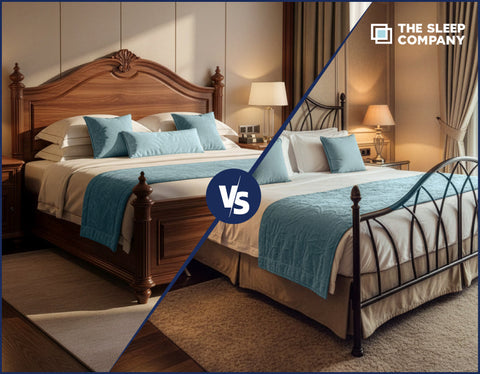
Here's something most people don't think about: your bed frame isn't just holding up your mattress -...
Read More
You've probably had this thought at least once, why does every hotel bed feel amazing while your...
Read More
Your mattress is probably the second-biggest purchase you’ll make after a car or home, somewhere between ₹15,000...
Read More
Your mattress collects roughly 500 million skin cells every year. Not a typo. That's half a billion...
Read More
What is SmartGRID? A Revolution for the Mattress Industry/Comfort Industry SmartGRID is designed with Japanese Patented Technology...
Read More
A major shift is underway in the mattress sector in India. Most Indians are ditching legacy mattress...
Read More
Do you wake up every morning with a serious dose of back pain? Then, a good orthopedic...
Read More
Queen Vs King Bed: Complete Size Guide for Indian Bedrooms Choosing between a queen bed vs king...
Read More
The 2025 GST overhaul brings clarity and efficiency to Indias tax landscape, placing mattresses squarely under the...
Read More
Soft, Medium or Firm Mattress (2025), Which is Best For You? Most people discover their mattress firmness...
Read More
Choosing the best mattress in India isn’t as simple as it seems. We get it! With countless...
Read More