
My Cart
Order Note


Mattress

Recliner Sofa

Chair

Desk

Elite Sofa

Massager

Recliner Bed

Pillows

Cushions

Bedding
Mattress
Recliner Bed
Recliner Sofa
Elite Sofa
Chair
Desk
Bedding
Pillow & Cushion
Massager
Mattress
Pillow & Cushion
Chair
Desk
Recliner Sofa
Recliner Bed
Elite Sofa
Bedding
Massager
Talk to Us
Get Help Choosing the Right Product

Stores near you
Find and visit our experience stores
Request a call back
Talk to our experts about our products
Comfort Quiz
Get a chance to win a free recliner!


My Cart


Memory foam mattress owners in India report sleeping hot at least three nights a week. The material that makes memory foam comfortable — dense, body-hugging, pressure-relieving — is the same material that traps heat against the skin. Air conditioning cools the room, but it cannot do much about the contact temperature between a human body and a foam surface radiating stored warmth back at it.
A cooling mattress topper addresses this problem without requiring a full mattress replacement. These products work through actual physics, not marketing magic. Gel absorbs heat from the body while ventilated foam structures allow air to circulate beneath the surface. Phase-change materials actively regulate temperature throughout the night. Prices range from around ₹5,000 for basic options to ₹25,000 for premium cooling bed toppers with advanced features.
The real question is not whether cooling toppers work — the science is well established. The question is which technology, thickness, and price point match specific sleeping conditions. That depends on climate, mattress type, body temperature patterns, and budget.
Three main technologies dominate the market, and each works through a fundamentally different mechanism.

Manufacturers mix cooling gel beads into memory foam during production. This gel pulls heat away from the body faster than foam alone can manage. The principle is similar to why a metal spoon feels cold compared to a wooden one — the gel acts as a heat sink, drawing thermal energy away from the skin surface.
Quality matters enormously here. Cheap toppers use minimal gel content (maybe 5% of total material), and that small amount saturates within an hour. Premium versions pack 15–20% gel content with strategic distribution throughout the foam layer. The price difference reflects this directly. A ₹3,000 topper and a ₹15,000 topper might look identical in photos, but the performance gap becomes painfully obvious around 2am.
Traditional memory foam traps air in closed cells, which means no circulation and no heat escape. Open-cell designs punch tiny channels through the material, allowing air to move and heat to dissipate. The SmartGRID technology from The Sleep Company demonstrates this principle well — the grid structure promotes airflow naturally while still providing adaptive support through its unique polymer construction.
This sits at the premium end of cooling technology. PCM fabrics absorb heat when temperatures rise and release it when things cool down, actively regulating rather than just absorbing passively. NASA developed this technology for spacesuits, and it now shows up in premium mattress covers and toppers. Expect to pay significantly more for PCM products, but the temperature regulation is noticeably more consistent than gel alone.
A handful of brands have engineered their own cooling textiles that outperform generic gel and ventilated foam alternatives. SnowTec® fabric from The Sleep Company is one such innovation, designed to keep the sleep surface 4–6 degrees cooler than standard mattress fabrics. The cooling effect comes from a specialised yarn structure that disperses body heat across a wider surface area rather than letting it pool under the sleeper. One important caveat for buyers — SnowTec® is woven directly into select Sleep Company mattresses and is not sold as a separate topper, so anyone wanting this specific technology needs to consider a full mattress upgrade rather than a topper add-on.
Three product categories exist, and they solve different problems. Confusing them leads to disappointment and wasted money.

| Product Type | Thickness | Best For | Price Range |
|---|---|---|---|
| Cooling Mattress Topper | 5–10cm | Temperature + comfort modification | ₹5,000–25,000 |
| Cooling Mattress Pad | 2–4cm | Temperature only, existing comfort is fine | ₹3,000–12,000 |
| Cooling Mattress Cover | Minimal | Surface cooling, moisture wicking | ₹1,500–5,000 |
The decision framework is straightforward. If the mattress feels wrong AND sleeps hot, a topper solves both problems. If comfort is fine but temperature is not, a pad handles it. If the goal is testing whether cooling products make a noticeable difference before investing heavily, start with a cover.
Not everyone needs cooling products. Some people sleep cool naturally regardless of conditions. But certain groups benefit enormously from a quality cooling mattress topper.

What specifications actually matter when shopping for a cooling bed topper? Several factors separate worthwhile purchases from expensive disappointments.
Proper setup and maintenance preserve cooling effectiveness throughout the product lifespan. Neglecting these basics can reduce performance within months.
Marketing overpromises on cooling products consistently. Here is what actually happens with real-world use.
India presents specific cooling challenges that vary significantly by region and household setup.
| Region | Climate Challenge | Best Technology |
|---|---|---|
| Northern Plains | Extreme heat, low humidity | Gel-infused + ventilated foam |
| Coastal / Southern | High humidity year-round | PCM + moisture-wicking covers |
| Variable AC households | Power cuts, minimal AC use | High-capacity gel, independent function |
The Sleep Company mattress collection handles temperature through inherent material design rather than surface additives. SmartGRID technology promotes airflow through structural engineering — the grid pattern creates 2,500+ air channels that prevent heat buildup at the source. The SnowTec mattress range takes this further with proprietary SnowTec® fabric woven into the cover, keeping the sleep surface 4–6 degrees cooler all night without fading like topical gel treatments. For anyone considering full mattress replacement, this remains the most effective route to consistent cooling rather than layering additives onto a problematic existing mattress.
For hot sleepers who need a permanent solution rather than a surface layer, The Sleep Company's SnowTec® mattress range combines SnowTec® cooling fabric with SmartGRID's 2,500+ air channels to deliver sleep that is 4–6 degrees cooler than a standard mattress — a measurably greater drop than gel-infused toppers alone can achieve. Available across orthopedic and luxury variants, it's the strongest built-in cooling option for Indian conditions.
Quality cooling mattress toppers represent worthwhile investments for hot sleepers seeking improved rest without full mattress replacement. Understanding the technologies, matching products to specific needs, and maintaining proper care ensures years of cooler, more comfortable sleep.
Start by identifying the primary problem: temperature alone, or temperature plus comfort. Match the product category accordingly, and factor in regional climate and AC usage patterns. Checking for certifications and removable, washable covers eliminates common post-purchase frustrations.
Explore The Sleep Company mattress collection to compare options engineered for temperature management through SmartGRID technology. Sometimes the most effective solution is not adding layers but starting with a mattress designed to sleep cool from the very beginning.
Quality cooling bed toppers maintain meaningful cooling for 3–5 years with proper care. Budget versions may show reduced effectiveness within 12–18 months. The foam itself often outlasts the cooling properties, and the change becomes noticeable when warm-weather sleep disruptions return despite no other environmental changes.
Yes. Cooling toppers sit on top of existing mattresses regardless of type — memory foam, innerspring, latex, or hybrid. They prove especially valuable for memory foam mattresses that already trap heat. Size matching is the only compatibility requirement.
Quality products from reputable manufacturers undergo skin contact testing. CertiPUR-US or OEKO-TEX certifications confirm this. The gel stays encapsulated within the foam rather than touching skin directly, and the removable cover provides the actual contact surface.
Possibly by a small margin. If the topper allows setting the AC a degree or two higher while maintaining sleep comfort, some energy savings follow. But toppers do not generate cooling independently and cannot replace climate control. They function best as supplements that make existing AC more effective at the body-mattress interface.
For most users, 5–7cm thickness provides adequate cooling without dramatically altering mattress feel. Thicker options (8–10cm) suit those wanting both temperature management and significant comfort modification. Thinner cooling mattress covers or pads (2–4cm) work better when temperature is the sole concern.
Using electric blankets directly on cooling toppers negates the cooling benefits and may damage some materials over time. If heating is occasionally needed during winter months, the electric blanket should go above the fitted sheet rather than between the sheet and topper surface.


Workouts challenge your body in the best possible way. Whether you are strength training, running, cycling or...
Read More
Written by Dipti Mestry Pregnancy can bring many wonderful changes, but it can also bring a few...
Read More
Written by Dr. Aishwarya Panchal One of the most common assumptions I hear from patients with back...
Read More
Most people shopping for a new mattress in India right now compare two very different surface categories....
Read More
Buying a new mattress and realising the size is wrong is one of the most avoidable life...
Read More
Most mornings the ache between your shoulders or lower back fades by mid-morning and you chalk it...
Read More
Three mornings of waking up stiff and most people start blaming the gym, the commute, or how...
Read More
There is a surface in almost every Indian home pressed against the body for seven or eight...
Read More
Most people press down on a few mattresses in a showroom for ten minutes and spend the...
Read More
Waking up with a stiff back, a numb shoulder, or that dull ache below the hips does...
Read More
Most adult children notice the signs long before their parents do. A parent who used to sleep...
Read More
Picture a household in a coastal Indian city where one family member starts waking up congested every...
Read More
Spring mattresses are the common choice across most Indian households and have been for decades. They are...
Read More
Walk through any Indian apartment building between May and August and the pattern is identical from floor...
Read More
The bed frame size printed on a purchase receipt is often the only number a buyer brings...
Read More
Most people buying a mattress spend more time testing surface feel than thinking about what the sleeping...
Read More
Walk into most Indian homes and ask about the mattress, and the answer follows a familiar pattern:...
Read More
Walk into any mid-size Indian city's furniture market and the inventory looks roughly the same as it...
Read More
Most Indian households buy a new mattress when the old one becomes obviously unusable a visible sag,...
Read More
Indian summer nights are not simply warm they are a specific combination of heat above 35°C, relative...
Read More
Walk into any furniture showroom and ask about the best mattress for kids, and the answer almost...
Read More
Your kid sleeps more than you do. Ten to twelve hours daily for school-age children. During...
Read More
What Is an Orthopedic Mattress? Quick Answer: An orthopedic mattress is a sleep surface specifically designed for...
Read More
Memory foam changed how people think about mattresses. The material moulds to body shape in ways traditional...
Read More
Queen Size Mattress Dimensions Quick Answer: The standard queen size mattress dimension in India is 72 x...
Read More
Most couples don't realize their sleep problems stem from their mattress until one partner starts waking up...
Read More
A 68-year-old man complained about his back for three years straight. Three years. His family tried everything,...
Read More
Which Mattress Is Good for Health: Your Complete Guide to Peaceful Sleep in 2026 Most people spend...
Read More
Best Cooling Mattress for Hot Sleepers in India Walk through any Indian apartment building between May and...
Read More
MS Dhoni is not just your average Indian cricketer. Loved from all the corners of the nation,...
Read More
MS Dhoni’s Sleep Routine and the Meaning Behind ‘8’ MS Dhoni’s quiet decision to swap his jersey...
Read More
Waking up with a stiff back ruins your entire day, doesn't it? You drag yourself out of...
Read More
Latex vs Memory Foam Mattress: Which Is Better for Back Pain? It's already midnight. You are tossing...
Read More
What Is a Mattress Topper? Benefits, Types & How to Choose the Best One in India Your...
Read More
Foam Mattress vs Spring Mattress: Which Mattress Type Suits You Best? Your mattress affects your sleep quality...
Read More
Tips for Choosing the Right Mattress for Old People: A Complete Guide A 68-year-old man complained about...
Read More
Choosing the right mattress size affects your sleep quality more than most people realise especially in Indian...
Read More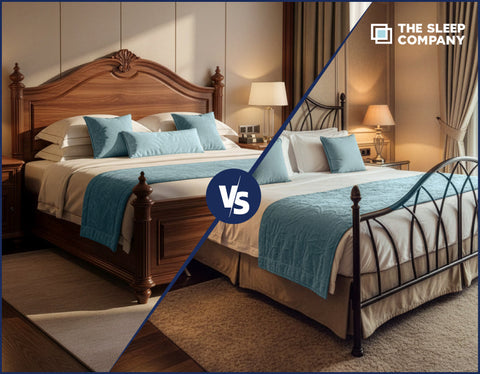
Here's something most people don't think about: your bed frame isn't just holding up your mattress -...
Read More
You've probably had this thought at least once, why does every hotel bed feel amazing while your...
Read More
Your mattress is probably the second-biggest purchase you’ll make after a car or home, somewhere between ₹15,000...
Read More
Your mattress collects roughly 500 million skin cells every year. Not a typo. That's half a billion...
Read More
What is SmartGRID? A Revolution for the Mattress Industry/Comfort Industry SmartGRID is designed with Japanese Patented Technology...
Read More
A major shift is underway in the mattress sector in India. Most Indians are ditching legacy mattress...
Read More
Do you wake up every morning with a serious dose of back pain? Then, a good orthopedic...
Read More
Queen Vs King Bed: Complete Size Guide for Indian Bedrooms Choosing between a queen bed vs king...
Read More
The 2025 GST overhaul brings clarity and efficiency to Indias tax landscape, placing mattresses squarely under the...
Read More
Which Mattress is Good for Health? Discover Several Benefits and How to Choose the Right One Do...
Read More
Soft, Medium or Firm Mattress (2025), Which is Best For You? Most people discover their mattress firmness...
Read More
Choosing the best mattress in India isn’t as simple as it seems. We get it! With countless...
Read More