
My Cart
Order Note


Mattress

Recliner Sofa

Chair

Desk

Elite Sofa

Massager

Recliner Bed

Pillows

Cushions

Bedding
Mattress
Recliner Bed
Recliner Sofa
Elite Sofa
Chair
Desk
Bedding
Pillow & Cushion
Massager
Mattress
Pillow & Cushion
Chair
Desk
Recliner Sofa
Recliner Bed
Elite Sofa
Bedding
Massager
Talk to Us
Get Help Choosing the Right Product

Stores near you
Find and visit our experience stores
Request a call back
Talk to our experts about our products
For your New Home
Find the perfect mattress - chat now


My Cart
Quick Answer: An orthopedic mattress is a sleep surface specifically designed for musculoskeletal support, ensuring proper spinal alignment and joint relief rather than just plush comfort. Because "orthopedic" is not a regulated term, buyers must look for proven technical features like adaptive zoning and pressure relief. The best orthopedic mattress depends entirely on your sleep position and body weight. Advanced solutions like SmartGRID technology adapt to specific body zones, collapsing under soft tissue (shoulders/hips) while remaining firm under the lower back, providing superior alignment compared to traditional memory foam or springs.
Back pain changes how you think about mattresses. Suddenly, that soft, sinking feeling stops being comfortable and starts being suspicious.
The term "orthopedic mattress" appears in almost every search result for back pain. However, there is a catch: no regulatory body certifies what counts as orthopedic. Literally any manufacturer can use the word. This guide strips away the marketing to explain what an orthopedic mattress actually is and how to choose the correct one for your body.
At its core, the concept refers to a sleep surface engineered for musculoskeletal support.
Your specific situation dictates the best material. A 55 kg side sleeper requires entirely different support than an 85 kg back sleeper with lumbar disc issues. Use this table to compare the primary materials used in orthopedic mattresses:
| Mattress Material | Primary Orthopedic Strength | Potential Drawbacks |
|---|---|---|
| Memory Foam | Good pressure relief and motion isolation | Traps heat, creates a sinking sensation, slow response time |
| Natural Latex | Bouncy, highly breathable, dust-mite resistant | Premium pricing, potential latex allergy concerns |
| Pocket Springs | Independent response per spring, breathable | Quality varies wildly; budget springs sag quickly |
| SmartGRID (Hybrid) | Adaptive zoning, continuous airflow, highly durable | Premium pricing tier |
Understanding how traditional materials fail helps highlight what you actually need for back support.
Ignore the marketing labels and look for these four structural features:
The complete Smart Ortho range covers seven distinct models tuned for specific buyers, starting with the entry-level Smart Ortho GRID Mattress right up to the premium Smart Ortho Royale. Use this comparison matrix to find your exact match:
| Smart Ortho Mattress Model | Firmness Level | Ideal Sleeper Profile | Standout Technical Feature |
|---|---|---|---|
| Smart Ortho GRID | Medium Firm | Entry buyers wanting SmartGRID benefits | Most affordable entry into the orthopedic range |
| Smart Ortho | Medium Firm | Everyday back pain relief seekers | Ortho Relief Foam combined with SmartGRID |
| Smart Ortho SnowTec | Medium Firm | Hot sleepers needing back support | Measures 4–6 degrees cooler |
| Smart Ortho Pro (Bestseller) | Firm | Chronic back pain sufferers, heavier bodies | 5-zone orthopedic support (Scientist Approved) |
| Smart Ortho Pro SnowTec | Firm | Hot sleepers needing firm, targeted support | Combines 5-zone support with SnowTec cooling |
| Smart Ortho Hybrid | Firm | Sleepers wanting responsive bounce plus support | Carbon tempered steel pocketed coils |
| Smart Ortho Royale (Top Rated) | Medium Firm | Premium buyers preferring latex | 100% natural latex plus 5-zone BodySense |
Budget is a primary factor for most buyers. The table below lists the starting MRP for the base single size of each model. Actual selling prices are typically lower due to ongoing discounts, and larger sizes cost proportionally more.
| Orthopedic Mattress Model | Starting Price (MRP) |
|---|---|
| Smart Ortho Mattress | ₹12,490 |
| Smart Ortho SnowTec Mattress | ₹15,490 |
| Smart Ortho Pro Mattress | ₹15,990 |
| Smart Ortho Hybrid Mattress | ₹20,940 |
| Smart Ortho Royale Mattress | ₹69,990 |
Understanding the mechanics of an orthopedic mattress helps cut through the marketing noise. Support, alignment, and proper pressure distribution matter significantly more than brand claims.
The question of which orthopedic mattress is best depends entirely on your body, your medical conditions, and your sleep style. SmartGRID technology specifically addresses the limitations of traditional orthopedic mattress designs by adapting to your zones. Because five minutes in a showroom cannot predict how your spine will feel after eight hours, The Sleep Company offers a 100-night home trial across the entire complete orthopedic mattress range. Your spine deserves better than guesswork.
Orthopedic mattresses use various materials including memory foam, latex, springs, and newer technologies like SmartGRID. The material matters less than the support characteristics. Each material can work if designed properly for spinal alignment. The Sleep Company range uses Ortho Relief Foam combined with SmartGRID across most models, with latex featured in the Royale and pocketed springs in the Hybrid.
Not anymore. Older thinking equated firmness with support. Current understanding recognises that medium-firm often works better because it allows contouring while maintaining alignment. Ultra-firm surfaces can create pressure points. The Sleep Company range includes both medium-firm options like Smart Ortho and Smart Ortho Royale, and firm options like Smart Ortho Pro and Smart Ortho Hybrid.
Pillow choice affects spinal alignment significantly. A mattress that supports your back properly can be undermined by a pillow that misaligns your neck. Browse The Sleep Company pillow collection for compatible options.
Quality orthopedic mattresses last seven to ten years. The SmartGRID range carries a 10-year warranty on most models and 12 years on Smart Ortho Royale because the grid design resists compression over time. Budget alternatives may need replacement within five years.
Not required but potentially helpful. Doctors can identify specific support needs based on your condition. General guidelines work for most people. Those with diagnosed spinal conditions benefit from professional input.
Partners with different support needs complicate selection. SmartGRID technology adapts to each body independently within the same surface. Motion isolation prevents one partner disturbing the other. The Smart Ortho Hybrid Mattress adds pocketed coils which improve motion isolation further, and is often the recommended pick for couples with different sleep schedules.


Workouts challenge your body in the best possible way. Whether you are strength training, running, cycling or...
Read More
Written by Dipti Mestry Pregnancy can bring many wonderful changes, but it can also bring a few...
Read More
Written by Dr. Aishwarya Panchal One of the most common assumptions I hear from patients with back...
Read More
Most people shopping for a new mattress in India right now compare two very different surface categories....
Read More
Buying a new mattress and realising the size is wrong is one of the most avoidable life...
Read More
Most mornings the ache between your shoulders or lower back fades by mid-morning and you chalk it...
Read More
Three mornings of waking up stiff and most people start blaming the gym, the commute, or how...
Read More
There is a surface in almost every Indian home pressed against the body for seven or eight...
Read More
Most people press down on a few mattresses in a showroom for ten minutes and spend the...
Read More
Waking up with a stiff back, a numb shoulder, or that dull ache below the hips does...
Read More
Most adult children notice the signs long before their parents do. A parent who used to sleep...
Read More
Picture a household in a coastal Indian city where one family member starts waking up congested every...
Read More
Spring mattresses are the common choice across most Indian households and have been for decades. They are...
Read More
Walk through any Indian apartment building between May and August and the pattern is identical from floor...
Read More
The bed frame size printed on a purchase receipt is often the only number a buyer brings...
Read More
Most people buying a mattress spend more time testing surface feel than thinking about what the sleeping...
Read More
Walk into most Indian homes and ask about the mattress, and the answer follows a familiar pattern:...
Read More
Walk into any mid-size Indian city's furniture market and the inventory looks roughly the same as it...
Read More
Most Indian households buy a new mattress when the old one becomes obviously unusable a visible sag,...
Read More
Indian summer nights are not simply warm they are a specific combination of heat above 35°C, relative...
Read More
Walk into any furniture showroom and ask about the best mattress for kids, and the answer almost...
Read More
Your kid sleeps more than you do. Ten to twelve hours daily for school-age children. During...
Read More
Memory foam changed how people think about mattresses. The material moulds to body shape in ways traditional...
Read More
Queen Size Mattress Dimensions Quick Answer: The standard queen size mattress dimension in India is 72 x...
Read More
Cooling Mattress Topper: Technologies, Types and How to Choose Memory foam mattress owners in India report sleeping...
Read More
Most couples don't realize their sleep problems stem from their mattress until one partner starts waking up...
Read More
A 68-year-old man complained about his back for three years straight. Three years. His family tried everything,...
Read More
Which Mattress Is Good for Health: Your Complete Guide to Peaceful Sleep in 2026 Most people spend...
Read More
Best Cooling Mattress for Hot Sleepers in India Walk through any Indian apartment building between May and...
Read More
MS Dhoni is not just your average Indian cricketer. Loved from all the corners of the nation,...
Read More
MS Dhoni’s Sleep Routine and the Meaning Behind ‘8’ MS Dhoni’s quiet decision to swap his jersey...
Read More
Waking up with a stiff back ruins your entire day, doesn't it? You drag yourself out of...
Read More
Latex vs Memory Foam Mattress: Which Is Better for Back Pain? It's already midnight. You are tossing...
Read More
What Is a Mattress Topper? Benefits, Types & How to Choose the Best One in India Your...
Read More
Foam Mattress vs Spring Mattress: Which Mattress Type Suits You Best? Your mattress affects your sleep quality...
Read More
Tips for Choosing the Right Mattress for Old People: A Complete Guide A 68-year-old man complained about...
Read More
Choosing the right mattress size affects your sleep quality more than most people realise especially in Indian...
Read More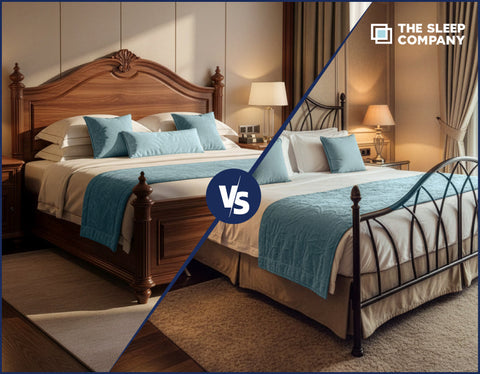
Here's something most people don't think about: your bed frame isn't just holding up your mattress -...
Read More
You've probably had this thought at least once, why does every hotel bed feel amazing while your...
Read More
Your mattress is probably the second-biggest purchase you’ll make after a car or home, somewhere between ₹15,000...
Read More
Your mattress collects roughly 500 million skin cells every year. Not a typo. That's half a billion...
Read More
What is SmartGRID? A Revolution for the Mattress Industry/Comfort Industry SmartGRID is designed with Japanese Patented Technology...
Read More
A major shift is underway in the mattress sector in India. Most Indians are ditching legacy mattress...
Read More
Do you wake up every morning with a serious dose of back pain? Then, a good orthopedic...
Read More
Queen Vs King Bed: Complete Size Guide for Indian Bedrooms Choosing between a queen bed vs king...
Read More
The 2025 GST overhaul brings clarity and efficiency to Indias tax landscape, placing mattresses squarely under the...
Read More
Which Mattress is Good for Health? Discover Several Benefits and How to Choose the Right One Do...
Read More
Soft, Medium or Firm Mattress (2025), Which is Best For You? Most people discover their mattress firmness...
Read More
Choosing the best mattress in India isn’t as simple as it seems. We get it! With countless...
Read More