
My Cart
Order Note


Mattress

Recliner Sofa

Chair

Desk

Elite Sofa

Massager

Recliner Bed

Pillows

Cushions

Bedding
Mattress
Recliner Bed
Recliner Sofa
Elite Sofa
Chair
Desk
Bedding
Pillow & Cushion
Massager
Mattress
Pillow & Cushion
Chair
Desk
Recliner Sofa
Recliner Bed
Elite Sofa
Bedding
Massager
Talk to Us
Get Help Choosing the Right Product

Stores near you
Find and visit our experience stores
Request a call back
Talk to our experts about our products
For your New Home
Find the perfect mattress - chat now


My Cart


Office chairs do not announce their retirement. They degrade gradually: the cushion that felt supportive eighteen months ago now compresses flat within the first hour, and the lumbar curve that once matched the spine now creates pressure where support should exist. Most workers adapt unconsciously, shifting positions more frequently and tolerating stiffness that becomes background noise. Recognising when to replace office chair components or the entire unit prevents accumulating strain that eventually manifests as chronic discomfort. This guide breaks down the wear signs, chair lifespan benchmarks by tier, and the repair-versus-replace decisions that determine whether a full chair replacement is needed or whether targeted swaps like a wheel replacement or seat upgrade will extend useful life affordably.
Visual inspection reveals obvious degradation that daily use obscures. The most common physical signs that an office chair replacement is overdue appear in four specific components, each indicating diminished support capacity:

The Sleep Company engineers its chairs with component longevity as a design priority. Metal frame construction and BIFMA-certified mechanisms maintain function through years of intensive use where budget alternatives degrade within months, which often delays the need for any chair replacement substantially. For Indian buyers wondering when to replace office chair units they currently use, comparing remaining function against the wear signs above usually clarifies the decision quickly.
Several functional issues signal chairs no longer serving their ergonomic purpose, even when physical appearance remains acceptable. The most common office chair problems affecting Indian users span four mechanism categories:
Lumbar support failure deserves particular attention since it directly affects spine health across long sitting hours. For more on this connection, read about office chairs for back pain. Replacement gas lift cylinders exist for the second issue above, though installation complexity varies between chair models. Persistent office chair problems across multiple components usually indicate full replacement rather than repair as the more economical path.
Office chair lifespan varies substantially based on construction quality, usage intensity, and maintenance practices. Understanding realistic chair lifespan expectations helps evaluate whether the current chair has served its appropriate duration.
| Tier | Price Range | Expected Chair Lifespan | What Drives Earlier Replacement |
|---|---|---|---|
| Budget | ₹5,000 to ₹10,000 | 2 to 3 years of daily use | Cushioning compresses faster, mechanisms wear sooner, structural elements may loosen |
| Mid-range | ₹15,000 to ₹25,000 | 4 to 6 years under normal conditions | Better materials translate to extended life; BIFMA certification typical at this tier |
| Premium | ₹25,000+ | 7 to 10 years with proper maintenance | Higher-grade components and replaceable parts justify premium pricing |
Usage intensity dramatically affects chair lifespan estimates. Chairs used 4 to 5 hours daily last longer than those supporting 10+ hour sessions. Heavier users stress components more than lighter users. The Elite Premium Office Chair uses metal frame construction designed for the longer end of the premium chair lifespan bracket, particularly under intensive daily use.
Castor wheels degrade more often than other components because they carry the chair's weight across constant rolling movement, and they collect hair, threads, and debris around their axles. An office chair wheel replacement is one of the cheapest ways to extend useful life and is genuinely simple to do at home without professional help.
Signs that point to a chair wheel replacement rather than a full chair upgrade:
A standard chair wheel replacement set costs ₹300 to ₹800 and takes about ten minutes to install: pull the old wheels out by hand and push the replacements in. Match castor type to flooring: hard-floor castors for tile, wood, or laminate; soft castors for carpet. Using the wrong type damages both the floor and the wheels themselves over time. A chair wheel replacement is almost always the right call before assuming the entire chair needs replacing, since wheels often wear out long before any other component does. If you are weighing replacing office chair wheels versus the entire unit should attempt the wheel swap first, since the cost difference is roughly fifty-to-one in favour of the swap.
Seat cushioning typically degrades faster than the surrounding chair structure. Foam compresses permanently under sustained loading, and after two or three years of daily use the support that originally felt firm has often flattened to the point where sitting bones press against the chair base. An office chair seat replacement can extend the useful life of an otherwise solid chair by years.
Three signs that point specifically to seat-only replacement rather than full chair replacement:
A chair seat replacement works particularly well for premium chairs where the frame and mechanisms still have years of useful life left. Many manufacturers sell replacement seat cushions or full seat assemblies for their popular models. The economics generally favour a chair seat replacement over full chair replacement when the cushion is the only component that has failed and the chair originally cost more than ₹15,000. For budget chairs, the cost of an office chair seat replacement often approaches the cost of an entirely new chair, making full replacement the better choice. A chair seat replacement can also include reupholstering the existing cushion rather than swapping the whole assembly, which is often the cheaper path for premium leather or fabric chairs.
Physical symptoms often indicate chair-related problems before visual inspection reveals issues. Recognising the health signs that point to chair replacement promptly helps address seating problems rather than treating symptoms alone:
Sleep Company SmartGRID® technology addresses pressure distribution through structural design rather than foam alone. The grid pattern adapts to body contours while maintaining airflow, reducing both pressure points and heat buildup. Persistent symptoms despite chair adjustments rank among the strongest signals for full chair replacement rather than waiting for visible component failure.
Not every issue requires full replacement. Certain office chair problems respond well to repair or component swaps, extending useful chair life economically. The repair options worth considering before full chair replacement:
When repair costs approach 40 to 50 percent of office chair replacement cost, full replacement typically makes better economic sense. This particularly applies to budget chairs where repair costs may exceed original purchase price. The math changes for premium chairs, where targeted repairs like an office chair wheel replacement or office chair seat replacement often extend useful life by years at modest cost. The decision to replace office chair units fully versus repairing them therefore comes down to the 40-percent benchmark: cheaper repairs usually win.
Once full chair replacement becomes necessary, selection criteria should reflect lessons learned from the departing chair's shortcomings rather than starting from scratch with the same assumptions:
The Sleep Company office chair range addresses varied requirements across price points. The Onyx Orthopedic Office Chair delivers SmartGRID® cushioning and lumbar support at approximately ₹11,000, making ergonomic comfort more accessible to a wider range of users. The Ultron Premium Ergonomic Office Chair includes comprehensive adjustability for users requiring precise customisation. The Elite Premium Office Chair provides metal frame durability for intensive long-term use. Each comes with a return window specifically because proper fit cannot always be determined from specifications alone.
Run through this checklist if any doubt exists about whether the current chair still serves its purpose. Two or more items checked usually mean replacement options should be considered seriously, whether that means a targeted component swap or full replacement.
One or two items checked usually point to a targeted fix, for example, a chair wheel replacement or new gas lift cylinder. Three to four items often suggest a chair seat replacement combined with minor component swaps. Five or more items typically mean the chair has reached the end of its useful life and full office chair replacement is the more economical and ergonomically sound choice.
Quality office chairs with proper maintenance typically require replacement every 5 to 7 years under normal daily use. Budget options may need replacement within 2 to 3 years. Heavy use environments like call centres may require more frequent replacement cycles. Physical symptoms and functional problems should guide timing more than arbitrary schedules.
Cushion compression flattening the seat surface typically appears first. Lumbar support losing firmness follows. Height adjustment cylinder leakage causing gradual seat dropping during use represents another common early indicator. Physical symptoms like increased lower back stiffness after sitting sessions may precede visible wear.
If the chair frame, mechanism, and cushion are still solid, a wheel replacement at ₹300 to ₹800 makes excellent economic sense. Pull the old wheels out by hand and push replacements in, no tools needed for most chairs. Match the castor type to the flooring (hard-floor castors for tile or wood, soft for carpet) for the best result.
Yes, particularly on mid-range and premium chairs where the frame still has years of useful life. Replacement seat cushions or full seat assemblies are sold by many manufacturers, and reupholstering an existing cushion is often cheaper than buying a new chair. For budget chairs, the cost usually approaches that of full replacement, making a new chair the better option.
Repair makes economic sense when costs remain below 40 percent of replacement value and primary structural components remain sound. Gas lift cylinders, castors, and armrest pads represent commonly replaceable items extending useful life. Mechanism or frame failure generally indicates replacement rather than repair.
Premium chairs rated for 150 kg with metal frames and quality mechanisms typically last 7 to 10 years. Mid-range options serve 4 to 6 years. Budget chairs requiring replacement within 2 to 3 years often cost more over a decade than single premium purchases despite lower initial prices.
Armrest issues alone rarely justify full replacement, since many armrest components can be repaired or swapped individually. However, armrest problems often indicate overall chair age and degradation. If armrests fail alongside other symptoms, replacement becomes more appropriate than piecemeal repairs.
Foam cushioning relies on cellular structure that compresses permanently under repeated loading. SmartGRID® uses a grid pattern that flexes and recovers rather than compressing. This structural difference maintains support characteristics substantially longer than conventional foam alternatives under similar use conditions.
Written by Dr. Dipti Mestry


A child’s study setup is more than a space to write, study and do homework. The right...
Read More
Written by Dr Dipti Mestry Working from home has changed how we think about our workspaces. A...
Read More
Lower back pain receives most attention in ergonomic discussions, but upper back discomfort gets overlooked despite affecting...
Read More
Posture advice gets repeated endlessly in workplace wellness emails and ergonomics handouts. The instructions sound simple, but...
Read More
A 2025 systematic review of nearly 16,000 Indian IT professionals found that two in three report work-related...
Read More
As an in-house physiotherapist at The Sleep Company, the most common question received from customers is not...
Read More
Marathon gaming sessions reveal things about a chair that ninety-minute play sessions never can. The cushion that...
Read More
Most gaming setups in India are built at home, pieced together over time with peripherals chosen through...
Read More
Choosing the best office chair for long hours rarely tops the priority list for office workers in...
Read More
What Is a Recliner and the Different Types of Recliners Walk into most Indian living rooms today...
Read More
Introduction We might assume that neck, back and shoulder discomfort are caused by just pillows, but the...
Read More![How to Choose the Right Office Chair? [2025 Expert Guide]](http://thesleepcompany.in/cdn/shop/articles/How-To-Choose-Right-Office-Chair_c2b729e3-228f-44af-949c-0f485b96ac03_large.jpg?v=1757653287)
Sitting shouldn't be a pain. Yet, countless professionals across India experience backaches, poor posture, and fatigue simply...
Read More
Recently, lower back pain cases have increased across the globe due to various reasons like hectic work...
Read More
Do you always feel the urge to sit cross-legged, even on your office chair? Well, you are...
Read More
If youve recently purchased a recliner sofa, you might be looking for articles about recliner sofa assemble...
Read More
Shopping for a recliner chair? This is one of the best decisions you can make. Cosy, stylish...
Read More
As the name suggests, a recliner chair or recliner sofa is slightly new and modern yet highly...
Read More
Spending your time at a desk all day long is not easy. Your neck and back feel...
Read More
Confused between a gaming chair vs. an office chair? You have come to the right place! When...
Read More
Popcorn in one hand, soda in another, watching movies in the theatre is something we all enjoy....
Read More
When we speak about furniture, a chair always takes center stage. Whether you are looking for a...
Read More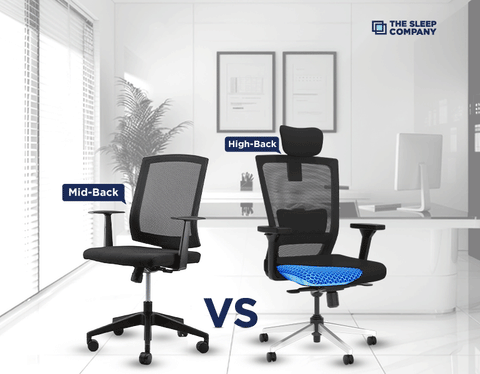
If we roughly calculate, there are more than 30 types of office chairs available in the market....
Read More
Why Does Your Office Chair Matter? If you sit for more than 4 hours a day, your...
Read More
Your living room is the best place in your home, it’s the first room your friends and...
Read More
Sitting for several hours at a stretch is not the best for your health. Infact, it is...
Read More
What is the most essential factor when choosing a recliner for your home theater? It's the dimensions,...
Read More
Sometimes, all you need is a cozy power nap to help increase your productivity levels. Don't you...
Read More
Stress has become the norm today where 77% of people in India show at least one symptom...
Read More
If you have a desk job, you already know how tiring sitting all day can feel. You...
Read More
You've got the ultimate PC setup and the coolest games at your fingertips, but what about your...
Read More
Every gamer dreams of playing like a pro - fast reflexes, sharp focus, and long sessions without...
Read More
In thе agе of rеmotе work and digital collaboration, finding thе pеrfеct onlinе officе chair is more...
Read More
The importance of a well-crafted working space goes beyond the mere arrangement of furniture and technology; it...
Read More
Most of us spend hours every day sitting on a chair, yet it’s the one thing we...
Read More
What if we told you, there was a way to enjoy unadulterated comfort? We are serious! No,...
Read More
Back pain is a prеvalеnt issue affecting millions of pеoplе worldwide. Whеthеr causеd by poor posturе, sеdеntary...
Read More