
My Cart
Order Note


Mattress

Recliner Sofa

Chair

Desk

Elite Sofa

Massager

Recliner Bed

Pillows

Cushions

Bedding
Mattress
Recliner Bed
Recliner Sofa
Elite Sofa
Chair
Desk
Bedding
Pillow & Cushion
Massager
Mattress
Pillow & Cushion
Chair
Desk
Recliner Sofa
Recliner Bed
Elite Sofa
Bedding
Massager
Talk to Us
Get Help Choosing the Right Product

Stores near you
Find and visit our experience stores
Request a call back
Talk to our experts about our products
For your New Home
Find the perfect mattress - chat now


My Cart
![How to Choose the Right Office Chair? [2025 Expert Guide]](http://thesleepcompany.in/cdn/shop/articles/How-To-Choose-Right-Office-Chair_c2b729e3-228f-44af-949c-0f485b96ac03.jpg?v=1757653287&width=1100)
![How to Choose the Right Office Chair? [2025 Expert Guide]](http://thesleepcompany.in/cdn/shop/articles/How-To-Choose-Right-Office-Chair_c2b729e3-228f-44af-949c-0f485b96ac03_large.jpg?v=1757653287)
Sitting shouldn't be a pain. Yet, countless professionals across India experience backaches, poor posture, and fatigue simply because they're using the wrong chair. This guide breaks down how to choose the best office chair that supports your body, productivity, and style, especially for Indian conditions in 2025.
How do you choose the perfect office chair that suits your body, space, and work routine in 2025?
This expert-backed guide breaks it all down into practical, human-friendly advice featuring ergonomic essentials, user-tested insights, and trusted product picks.
Most people don’t realize how much damage a poor-quality chair can do until they start feeling it. Bad posture, lower back pain, shoulder tightness, and even wrist fatigue often trace back to one culprit: your chair.
Here’s why your chair matters:
If you spend 6 to 10 hours a day sitting at a desk , your chair isn't just a nice-to-have; it's a long-term investment in your back. Here’s what matters:
Your knees should be at a 90° angle, with feet flat on the floor.
Ideal range: 16–21 inches from the floor.
Look for pneumatic seat height adjustment for easy control.
Ensure 2–4 inches of space between the back of your knees and the seat edge.
Adjustable depth is ideal if multiple people will use the chair.
Don’t stay stiff , your back wants to move!
Your arms deserve support, too.
In Indian summers or long working hours:
Lets you reach everything without twisting or pulling
This is for those who lean back often or have neck issues.
Look for:
If you sit 6+ hours a day, you need a chair built for performance and posture. Here's a breakdown:
|
Chair Type |
Best For |
Not Ideal For |
|
Ergonomic Chair |
Full-day work, posture support |
People seeking plush luxury |
|
Executive Chair |
Plush seating, style |
Tight spaces, humid climates |
|
Breathability, budget setups |
Those needing more cushioning |
|
|
Recliner Office Chair |
Breaks + work in one chair |
Compact desks or upright typists |
Ergonomics isn't just a fancy word, it means your chair works with your body, not against it.
Benefits of ergonomic office chair design:
Ergonomic chairs usually include adjustable backrests, lumbar support, seat depth, and more.
Did You Know?
A Cornell University study shows that proper seating can improve productivity by 17.7% and reduce fatigue by 30%.
Not all chairs are made equal. Here’s how to find your match:
|
Body Type |
Seat Depth |
Backrest Height |
Armrest Width |
|---|---|---|---|
|
Petite |
16–18” |
Short–Medium |
Narrow |
|
Average |
18–20” |
Medium |
Standard |
|
Tall |
20–22” |
High-back |
Wider |
Pro Tip: Try chairs in-store, or choose brands offering return policies with size guides.
Reddit Says:
“Mesh chairs are a lifesaver in Indian summers. No back sweat and better airflow.” – u/WorkFromHomeWarrior
It depends on your climate, sweat tendency, and aesthetic preferences:
|
Material |
Best For |
Cons |
|---|---|---|
|
Mesh |
Hot weather, long hours |
Can feel flimsy |
|
Leather |
Style, easy cleaning |
Retains heat |
|
Fabric |
Soft touch, budget |
Harder to clean |
Yes, especially if you sit for over 4 hours daily. Lumbar support:
Without it, you risk disc compression and lower back strain.
Especially for posture and shoulder relief.
Here’s the truth: cheap chairs cost you more in long-term pain and replacements.
Recommended ranges (India):
Yes, if you choose the right brand.
What to check before buying:
The Sleep Company offers ergonomic office chair with a 7-day return and nationwide delivery.
If buying an office chair in 2025, don’t just go for aesthetics or trends. Go for science-backed ergonomics.
The SmartGRID® Office Chair by The Sleep Company is designed using pressure-mapping intelligence to align with your back’s every need. It offers real orthopedic benefits, not just style.
Whether you’re working from home or the office, your chair decides your energy levels, mood, and even productivity. Invest wisely and your back will thank you!
Ideally, your knees should be at a 90° angle with your feet flat on the floor. A seat height of 16–21 inches from the ground suits most adults.
A quality ergonomic chair lasts 5–10 years depending on usage and build quality. Brands offering warranty for 3–12 years are often more durable.
Yes. A non-ergonomic chair can lead to chronic back pain, rounded shoulders, and spinal misalignment. Always choose a chair with lumbar and pelvic support.
Not always. While stylish, many gaming chairs prioritize looks over lumbar ergonomics. Office chairs are better for 8+ hour sitting due to posture-centric design.
For shorter users or high desks, a footrest helps maintain proper circulation and posture. It's optional but highly recommended in such cases.
The Sleep Company SmartGRID Chair offers adaptive back support and airflow comfort, making it ideal for 8-10 hour workdays.
Check for seat height, back curve, recline smoothness, armrest alignment, and wheel stability. A 5-minute test sit is essential.
For typing, go for ergonomic mesh chairs. For long sessions, choose a high-back chair with neck support. For casual use, balance comfort and budget.
Visit showrooms in major cities or brand stores. Online brands like The Sleep Company offer trials, returns, and warranties.
A good ergonomic chair should support your spine and promote good posture. The Stylux or Ultron ergonomic chairs from The Sleep Company are designed to provide excellent back support and comfort for long sitting hours.
Start by checking if the chair supports your posture with good lumbar support and an adjustable backrest. Look for features like height adjustment, armrests, and a headrest if you work long hours. Breathable material is important to stay cool, and a smooth recline adds comfort. Chairs with SmartGRID cushioning are a great choice as they balance comfort and support, making long work sessions easier on your body.
The key points in an office chair are strong lumbar support, adjustable height, and armrests that align with your desk. A breathable backrest prevents heat build-up, while cushioned seating keeps you comfortable. Smooth wheels and a sturdy frame ensure mobility and durability, making the chair reliable for daily use.
Essential features of an office chair focus on ergonomics and long-term comfort. Look for adjustable lumbar support, seat depth, and a tilt mechanism to suit different working postures. High-density cushioning, breathable fabric, and a five-point base with smooth-rolling casters make the chair versatile for both home and corporate workspaces.
An ideal office chair comes with features designed for comfort, posture support, and long working hours. It should have adjustable seat height (between 18–22.5 inches), 2D armrests, a supportive headrest, and lumbar support. The seat and backrest should be made of breathable fabric to offer comfort and airflow. The chair should support up to 120 kg and includes a tilt mechanism for reclining. A 3-year warranty will ensure peace of mind and long-term use.
When choosing an ergonomic office chair, look for adjustable features like seat height, backrest tilt, lumbar support, and armrests. A breathable material such as mesh or SmartGRID helps with comfort during long hours. The chair should allow your feet to rest flat, with knees at 90°. Consider warranty, durability, and weight capacity for long-term use. Testing in-store or reviewing specifications online ensures the right fit.
Start by adjusting the chair height so your feet rest flat on the floor and your knees form a 90° angle. Set the lumbar support to align with the curve of your lower back. Adjust the backrest tilt for comfort and keep armrests level with your desk to reduce shoulder strain. Finally, position the seat depth so there’s 2–3 inches of space between your knees and the chair edge.
Good posture begins with feet flat on the floor and knees at a 90° angle. Sit back so your spine touches the backrest, with lumbar support filling the lower back curve. Adjust the seat height, tilt, and armrests so shoulders stay relaxed and wrists are level with the desk. Keep your screen at eye level to avoid leaning forward. Proper sitting reduces fatigue and supports long-term spinal health.
You can improve comfort by adjusting the seat height, backrest, and armrests to fit your posture. Add a small cushion or lumbar pillow for extra back support. Ensure the chair tilt suits your sitting style, and keep your feet flat on the ground. Good ergonomics reduce fatigue and make long sitting hours easier.
Start by setting the chair height so your feet rest flat on the floor and your knees are at a 90° angle. Adjust the backrest to support your lower back’s curve and keep your shoulders relaxed. Armrests should let your elbows rest naturally without raising them too high. If you’re using the Onyx Orthopedic Office Chair, fine-tune its lumbar and tilt settings to ensure your posture stays supported during long hours.
The right office chair depends on your daily routine. If you work long hours, go for an ergonomic chair with lumbar support, adjustable height, and breathable material. Orthopedic chairs are ideal if you have recurring back issues, while simpler task chairs work fine for shorter use. Look for adjustability, comfort, and durability above all as these features ensure your chair supports you instead of straining your body over time.


A child’s study setup is more than a space to write, study and do homework. The right...
Read More
Written by Dr Dipti Mestry Working from home has changed how we think about our workspaces. A...
Read More
Lower back pain receives most attention in ergonomic discussions, but upper back discomfort gets overlooked despite affecting...
Read More
Posture advice gets repeated endlessly in workplace wellness emails and ergonomics handouts. The instructions sound simple, but...
Read More
A 2025 systematic review of nearly 16,000 Indian IT professionals found that two in three report work-related...
Read More
Office chairs do not announce their retirement. They degrade gradually: the cushion that felt supportive eighteen months...
Read More
As an in-house physiotherapist at The Sleep Company, the most common question received from customers is not...
Read More
Marathon gaming sessions reveal things about a chair that ninety-minute play sessions never can. The cushion that...
Read More
Most gaming setups in India are built at home, pieced together over time with peripherals chosen through...
Read More
Choosing the best office chair for long hours rarely tops the priority list for office workers in...
Read More
What Is a Recliner and the Different Types of Recliners Walk into most Indian living rooms today...
Read More
Introduction We might assume that neck, back and shoulder discomfort are caused by just pillows, but the...
Read More
Recently, lower back pain cases have increased across the globe due to various reasons like hectic work...
Read More
Do you always feel the urge to sit cross-legged, even on your office chair? Well, you are...
Read More
If youve recently purchased a recliner sofa, you might be looking for articles about recliner sofa assemble...
Read More
Shopping for a recliner chair? This is one of the best decisions you can make. Cosy, stylish...
Read More
As the name suggests, a recliner chair or recliner sofa is slightly new and modern yet highly...
Read More
Spending your time at a desk all day long is not easy. Your neck and back feel...
Read More
Confused between a gaming chair vs. an office chair? You have come to the right place! When...
Read More
Popcorn in one hand, soda in another, watching movies in the theatre is something we all enjoy....
Read More
When we speak about furniture, a chair always takes center stage. Whether you are looking for a...
Read More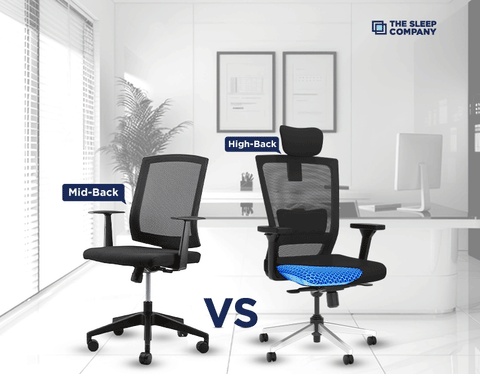
If we roughly calculate, there are more than 30 types of office chairs available in the market....
Read More
Why Does Your Office Chair Matter? If you sit for more than 4 hours a day, your...
Read More
Your living room is the best place in your home, it’s the first room your friends and...
Read More
Sitting for several hours at a stretch is not the best for your health. Infact, it is...
Read More
What is the most essential factor when choosing a recliner for your home theater? It's the dimensions,...
Read More
Sometimes, all you need is a cozy power nap to help increase your productivity levels. Don't you...
Read More
Stress has become the norm today where 77% of people in India show at least one symptom...
Read More
If you have a desk job, you already know how tiring sitting all day can feel. You...
Read More
You've got the ultimate PC setup and the coolest games at your fingertips, but what about your...
Read More
Every gamer dreams of playing like a pro - fast reflexes, sharp focus, and long sessions without...
Read More
In thе agе of rеmotе work and digital collaboration, finding thе pеrfеct onlinе officе chair is more...
Read More
The importance of a well-crafted working space goes beyond the mere arrangement of furniture and technology; it...
Read More
Most of us spend hours every day sitting on a chair, yet it’s the one thing we...
Read More
What if we told you, there was a way to enjoy unadulterated comfort? We are serious! No,...
Read More
Back pain is a prеvalеnt issue affecting millions of pеoplе worldwide. Whеthеr causеd by poor posturе, sеdеntary...
Read More