
My Cart
Order Note


Mattress

Recliner Sofa

Chair

Desk

Elite Sofa

Massager

Recliner Bed

Pillows

Cushions

Bedding
Mattress
Recliner Bed
Recliner Sofa
Elite Sofa
Chair
Desk
Bedding
Pillow & Cushion
Massager
Mattress
Pillow & Cushion
Chair
Desk
Recliner Sofa
Recliner Bed
Elite Sofa
Bedding
Massager
Talk to Us
Get Help Choosing the Right Product

Stores near you
Find and visit our experience stores
Request a call back
Talk to our experts about our products
For your New Home
Find the perfect mattress - chat now


My Cart


Why your neck and sleep position matter more than you think, and how to choose a pillow that supports you.
Waking up with a dull ache at the base of your skull or a stiff neck can make the whole day harder. Many people blame stress, screens, or dehydration first. But your pillow may be part of the picture. When your head and neck are not aligned while you sleep, the muscles and joints around them can strain, and that strain can show up as a headache or stiffness by morning.
Yes, it can be a cause for your headache. Especially if your pillow pushes your head too far forward, too far back, or to one side for hours, the neck muscles work harder to hold that position. Over time, this can lead to tension-type headaches or stiffness that you feel when you wake up. A pillow is not the only possible cause, but it is one of the few factors you can easily change.
Morning headaches have many possible causes, including poor sleep quality, dehydration, snoring or breathing problems, and alcohol. Neck position is one of them. If your headache is frequent, severe, or comes with other symptoms, please speak to a doctor. They can help identify the cause.
The right height keeps your neck roughly in line with your spine. For most back sleepers, that means a moderate loft that supports the natural curve of the neck without tilting the head forward. Side sleepers usually need a higher pillow to fill the gap between the head and the shoulder. Stomach sleepers generally need a flatter pillow, or none at all.
For some people, neck strain and poor sleep alignment may contribute to migraine episodes. However, migraines have many triggers, and the pillow is rarely the only one. If you live with migraines, speak to a doctor about a management plan rather than relying on a pillow change alone.
Look for these signs: you wake with a stiff neck or headache that eases during the day, your pillow has lost its shape, you feel the need to keep flipping it to find a cool or comfortable side, or your head seems to sink or tilt sharply. If you notice any of these, your pillow may no longer be supporting you well.
A stiff neck often comes from holding one position for hours, sleeping on a pillow that is too high or too low, or sleeping on your stomach with your head twisted. Adjusting your pillow height and sleep position can help, and gentle stretching in the morning may ease tightness.
Not necessarily. Some people with neck pain find that sleeping without a pillow helps, but many others feel more strain without one, especially side sleepers. Instead of going without, try a pillow that keeps your head level with your spine. If you are unsure, ask a physiotherapist to assess your sleep posture.
Most pillows lose their support within one to two years, depending on the materials and how often they are used. Replace yours when it no longer holds its shape, feels lumpy, or stops keeping your neck supported.
Neither is better for everyone. The best pillow depends on how you sleep. Back sleepers often do well with a medium loft, side sleepers usually need a thicker pillow, and stomach sleepers generally need a thin one. Choose by alignment, not by thickness alone.
Side sleepers generally benefit from a firm, supportive pillow with enough loft to keep the head level with the spine. A contoured or cervical-style pillow can help maintain that alignment through the night. If neck pain persists, consult a physiotherapist or doctor.
Your ideal pillow depends on the support, height and feel you prefer. Here are a few options from The Sleep Company to consider:


How each pillow material feels, sleeps, and lasts, so you can choose with confidence. The material inside...
Read More
A plain-language guide to our pillow materials, models, and who each one suits. Choosing a pillow can...
Read More
The best pillow for sleeping is not necessarily the softest, firmest or most expensive option. It is...
Read More
Waking up with a stiff neck usually gets blamed on "sleeping wrong." More often, it's the pillow:...
Read More
Most people wash their sheets every week and their pillows almost never. That gap is the problem....
Read More
Side sleeping is the most common position and the most demanding on a pillow. When lying on...
Read More
Your neck hurts every morning. Again. Maybe it's that pillow you've been using for years, the one...
Read More
Do Cooling Pillows Actually Help You Sleep Better? Quick Answer: Yes, cooling pillows effectively regulate sleep temperature,...
Read More
Sleeping Without Pillow: Good or Bad? What Actually Matters Quick Answer: Whether sleeping without a pillow is...
Read More
Waking up with a stiff neck again? That sharp pain when you turn your head? We know...
Read More
Waking up with neck pain is one of those things that sneaks up gradually. One morning it...
Read More
Best Sleeping Positions During Pregnancy: What Experts Recommend for Each Trimester Pregnancy sleeping positions do matter. But...
Read More
Introduction Neck pain is a common concern that affects millions. This issue resembles a modern epidemic due...
Read More
Do you wake up to neck or shoulder pain every morning? Does it hamper your productivity every...
Read More
Let's be real. Pillows are often the unsung heroes that help you achieve the coziest sleep, but...
Read More
How often do you wake up with a stiff neck or a sprain that feels super painful?...
Read More
While pregnancy is a joyous occasion in a woman's life, it also requires extreme care and attention....
Read More
Recovering from any surgery can be a highly uncomfortable process. But, to ensure you do it right,...
Read More
Neck pillows are versatile. Whether you want to induce comfort while traveling or need relief from chronic...
Read More
Most of us don't really think much about the pillow we use now, do we? We generally...
Read More
The new 'it' pillows in town today are the wedge pillows. While they have been known to...
Read More
The final task of the day is always going to bed. You change into the comfiest clothes,...
Read More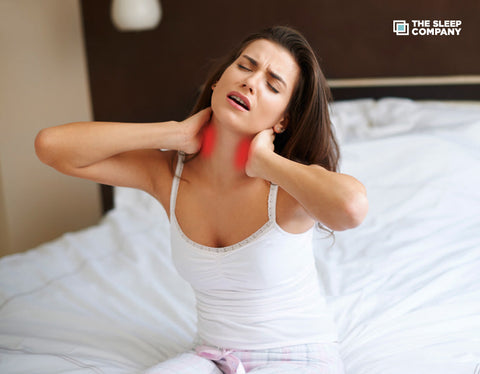
Waking up with neck pain? Maybe it's a nagging sprain that brings neck pain to the surface...
Read More
What if there was a pillow that could tell you how well you slept? Which could indicate...
Read More
You regularly wash your sheets, pillow covers, protectors, and whatnot! But what about the pillows? They need...
Read More
Most of our focus goes to the mattress, but what about pillows? Pillows are like supporting characters...
Read More
Pillows are unsung heroes. There, we said it! When it comes to sleep and comfort, mattress always...
Read More
Traveling is the one thing that soothes the soul. You experience new cultures, meet your people, and...
Read More
The women's journey to pregnancy is a fascinating and transformative course. Despite the constant amazement and metamorphosis,...
Read More
A good night’s sleep depends on a number of variables, including your mattress, the temperature, ambient noise,...
Read More
One of the common problems we face nowadays is excruciating neck pain, whether it is due to...
Read More