
My Cart
Order Note


Mattress

Recliner Sofa

Chair

Desk

Elite Sofa

Massager

Recliner Bed

Pillows

Cushions

Bedding
Mattress
Recliner Bed
Recliner Sofa
Elite Sofa
Chair
Desk
Bedding
Pillow & Cushion
Massager
Mattress
Pillow & Cushion
Chair
Desk
Recliner Sofa
Recliner Bed
Elite Sofa
Bedding
Massager
Talk to Us
Get Help Choosing the Right Product

Stores near you
Find and visit our experience stores
Request a call back
Talk to our experts about our products
For your New Home
Find the perfect mattress - chat now


My Cart
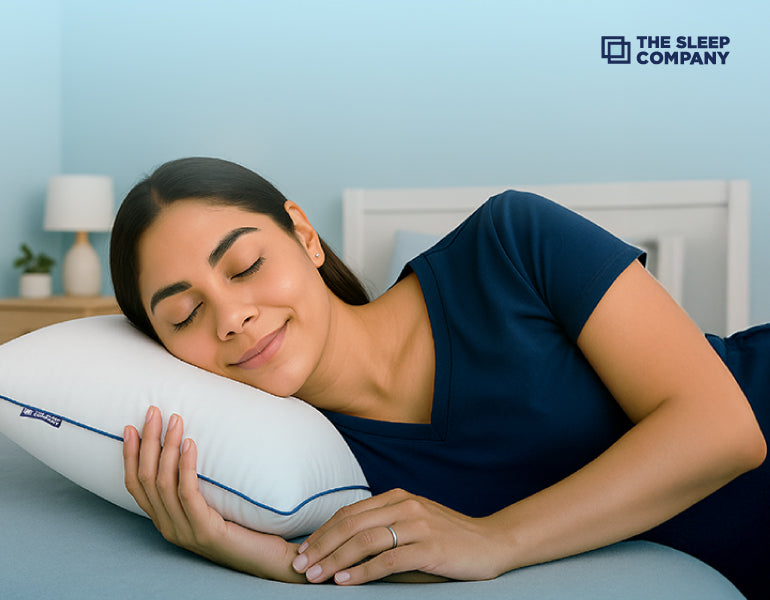

Let's be real. Pillows are often the unsung heroes that help you achieve the coziest sleep, but they are frequently overlooked and neglected. Once bought, we tend to take them for granted and let them be. Year after year, we use the same pillow without another thought. Infact, when was the last time you replaced your pillow? Because it is a necessity.
Pillows, like anything else in life, come with an expiration date. Following this is important as it can directly contribute to your health and sleep. But fret not. We come bearing all the information you need. In today's article, we are here to tell you how often you should replace your pillows and more. Let's dive in!
Quality sleep is a must for a quality life. Here, a good pillow guarantees a comfortable snooze that keeps you healthy, supports your immune system, and ensures your productivity never takes a hit.
But old pillows are no longer equipped to do a satisfactory job. From becoming saggy to harboring allergens, they can no longer offer the support you need. So, this can make it harder for you to fall asleep, cause aches and pain, and lead to a disrupted slumber. Thats not all. Old and worn-out pillows can cause allergy flare-ups, headaches, and more. To save yourself the unnecessary discomfort, it is best to replace pillows on time.

Your pillow sends out warning signals when its time for a change. If you notice any of them, it may be time for a switch.
You do not put anything under your head and call it a pillow, do you? You choose one because of its shape and firmness. But when your pillow starts deteriorating, it becomes flat and uneven. At this stage, it can no longer offer the support it once used to. However, if you continue to use the same pillow, you will end up experiencing bouts of tossing and turning, neck stiffness, etc.
If you are a sweaty sleeper, yellow stains are quite common. But washing them regularly and using protectors will keep the patches to a minimum. However, as your pillow grows older, the stains may become darker. Now, it's not just about the looks, but it can be a sign that your pillow has been exposed to moisture and bacterial buildup. This means it's time to bid goodbye.
Let's say you had no allergies or never woke up sneezing or coughing since the time you have been using your pillow. Even if you did, it was an insignificant amount of time. But these days, it has become the norm. If not sneezing, it's itchy eyes every morning, and at times, it's a scratchy throat. Well, your pillow may be to blame.
Pillows can collect dust mites, dead skin cells, and allergens over time, even if you wash them occasionally. These allergens can trigger sneezing fits, runny noses, or allergy flare‑ups. So, if you notice that you feel fine during the day but start sneezing as soon as you lie down, it's time for a switch.
The main job of your pillow is to keep your neck and shoulders supported and prevent aches or sprains. But when your pillow loses its shape, becomes lumpy or flat, it can no longer provide the support you need. Hence, you wake up in pain every other day.
You might feel fine when you go to bed, but notice stiffness or soreness as soon as you wake up. This means your pillow is no longer doing its job and needs to be replaced.
If you notice a lingering odor that doesn't seem to go away even after multiple washes, it's time for a change. Over time, pillows absorb sweat, natural body oils, drool, and even environmental odors. And, they seep deep into the filling.
So, no amount of surface cleaning can fully remove them. A bad smell can also mean that bacteria or mold might be growing inside, especially if your pillow has been exposed to moisture.
Let's get straight to the point. Expert opinion suggests replacing your pillows every 1-2 years. Even with regular washing and good care, your pillow becomes home to dust, sweat, and allergens over time. They also lose their shape and support, which can affect your sleep quality and neck health.
However, the timeline can differ from one brand to another, and as per the material used in the pillow. The table below unpacks the ideal replacement time of the pillow according to the type.
|
Pillow Type |
Ideal Replacement Time |
|
SmartGrid by The Sleep Company |
2-5 years |
|
Microfiber |
1-2 years |
|
Memory Foam |
2-3 |
|
Feather or Down |
1-3 years |
|
Polyester |
6 months-2 years |
|
Latex |
3-5 years |
|
Bamboo |
1.52 years |

Is there a way to extend your pillows lifespan? Here are a few pointers to help you out.
Proper care helps your pillows last their full lifespan with ease, and in some cases, it can even extend their life by a few months. However, a pillow still harbors dust mites and other allergens after frequent use. Once its time is up, its always best to replace it with a new one.
How do you care for your pillows the right way? The care‑instruction tag on your pillow has all the details you need, so make sure to follow it closely. For example, it will tell you whether your pillow can be machine‑washed or if it needs dry cleaning.
It also includes other important instructions, like what kind of detergent to use and whether to dry it in sunlight or shade. If you ever feel unsure, don't hesitate to contact the brands customer support. They can guide you on how to keep your pillow in the best shape possible.
Another great way to keep your pillow in good condition is by using a pillow protector. It adds an extra layer of protection and is especially helpful for people who sweat a lot while sleeping. A protector helps prevent stains and keeps dust and debris from reaching your pillow.
Just like a pillow cover, you can wash the protector once or twice a week. However, when it comes to cleaning the pillow itself, avoid over‑washing, as it can shorten its lifespan. Washing your pillow every three to six months is usually enough to keep it fresh and clean.
A pillow may look immaculate on the surface, but even the cleanest ones must be replaced every 2 years or as per the brand-specified timeline. Pillows accumulate dust mites, oils, dead skin cells, and more with every use. While this may not be seen with the naked eye, it makes your pillow not-fit for use internally. And when you continue to do so, it can lead to allergies or worsen them, and even disrupt your sleep.
Another clear indicator that your pillow is past its prime is when you frequently wake up with neck pain, which was previously never the case. So, for clean support and better sleep, aim to replace pillows within that 12-year window.

Here are three important things to keep in mind while choosing the perfect replacement pillow.
Your pillow should match your sleep style. There's no other way around it. Don't simply buy one because it looks fluffy or cozy. Now, a side-sleeper needs a high-loft, soft to medium-firm pillow to keep their neck aligned with their spine.
Coming back to sleepers, they need a medium-loft and medium-firm pillow to support the natural curve of their neck. Anything too high or too low can strain the neck. Finally, the stomach sleepers need low-loft, medium to firm pillows to keep their necks comfortable. If you are a combination sleeper. Try to strike a balance that satisfies both sleeping positions.
After step number one, you know the height and firmness of your ideal pillow. So now, let's move on to the material. From SmartGrid to Microfiber, you have a myriad of options to choose from. That's why, see what else you need from a pillow.
For instance, SmartGrid is breathable, hypoallergenic, and can offer great medium-firm support. Whereas, microfiber pillows are fluffy and can benefit side-sleepers. So, go for a pillow that checks all the right boxes for you.
From budget-friendly options under ₹ 1000 to premium ones priced at ₹ 20,000 and beyond, pillows come in a varied price range. So, have a budget in mind and go from there.
For instance, if you are looking for premium quality in a mid-range pillow, The Sleep Company has got you covered. The Smart ErgoRelief Pillow, priced at just ₹ 4,899, offers the best ergonomic support ever. It is breathable, perfect for all types of sleepers, even the combination ones, and provides relief from neck, head, and shoulder stress. Remember, a good pillow equals a good night's rest.
As aforementioned, the ideal rule of thumb is to replace your pillows every two years. With good maintenance, you can slightly extend the lifespan, but not more. Remember, even if your pillow looks clean, an old one can be home to dust mites, bacteria, and more. And, this is where you rest your head, so a quality pillow is a necessity.
If you are browsing for the perfect pillow, The Sleep Company has what you need. We offer our patented SmartGrid Technology that strikes the perfect balance between comfort and support in our pillows. From the Smart Hybrid Pillow to Smart Ergo Relief, you are spoiled for choice.
So, what are you waiting for? The Sleep Company has the ideal pillow replacement you need.
The basic rule of thumb is to replace your pillows every one to two years. But this can slightly differ from one brand to another, and also depending on the type of material used.
The 2-2-1 is a popular method of arranging pillows. Here, you place two large pillows, then two medium pillows, and then an accent pillow. This gives you a layered look and can be aesthetically pleasing.
No. You must not use the same pillow for 10 years unless it is designed to last that long or is made of material that doesn't easily deteriorate. Even then, proper pillow maintenance becomes mandatory. Most pillows are meant to be used for 1-2 years.
You discard a pillow if it's past its lifespan, which is about 2 years. You can do so sooner if you notice lumps, a bad smell, loss of shape, etc.


The best pillow for sleeping is not necessarily the softest, firmest or most expensive option. It is...
Read More
Waking up with a stiff neck usually gets blamed on "sleeping wrong." More often, it's the pillow:...
Read More
Most people wash their sheets every week and their pillows almost never. That gap is the problem....
Read More
Side sleeping is the most common position and the most demanding on a pillow. When lying on...
Read More
Your neck hurts every morning. Again. Maybe it's that pillow you've been using for years, the one...
Read More
Do Cooling Pillows Actually Help You Sleep Better? Quick Answer: Yes, cooling pillows effectively regulate sleep temperature,...
Read More
Sleeping Without Pillow: Good or Bad? What Actually Matters Quick Answer: Whether sleeping without a pillow is...
Read More
Waking up with a stiff neck again? That sharp pain when you turn your head? We know...
Read More
Waking up with neck pain is one of those things that sneaks up gradually. One morning it...
Read More
Best Sleeping Positions During Pregnancy: What Experts Recommend for Each Trimester Pregnancy sleeping positions do matter. But...
Read More
Introduction Neck pain is a common concern that affects millions. This issue resembles a modern epidemic due...
Read More
Do you wake up to neck or shoulder pain every morning? Does it hamper your productivity every...
Read More
How often do you wake up with a stiff neck or a sprain that feels super painful?...
Read More
While pregnancy is a joyous occasion in a woman's life, it also requires extreme care and attention....
Read More
Recovering from any surgery can be a highly uncomfortable process. But, to ensure you do it right,...
Read More
Neck pillows are versatile. Whether you want to induce comfort while traveling or need relief from chronic...
Read More
Most of us don't really think much about the pillow we use now, do we? We generally...
Read More
The new 'it' pillows in town today are the wedge pillows. While they have been known to...
Read More
The final task of the day is always going to bed. You change into the comfiest clothes,...
Read More
Waking up with neck pain? Maybe it's a nagging sprain that brings neck pain to the surface...
Read More
What if there was a pillow that could tell you how well you slept? Which could indicate...
Read More
You regularly wash your sheets, pillow covers, protectors, and whatnot! But what about the pillows? They need...
Read More
Most of our focus goes to the mattress, but what about pillows? Pillows are like supporting characters...
Read More
Pillows are unsung heroes. There, we said it! When it comes to sleep and comfort, mattress always...
Read More
Traveling is the one thing that soothes the soul. You experience new cultures, meet your people, and...
Read More
The women's journey to pregnancy is a fascinating and transformative course. Despite the constant amazement and metamorphosis,...
Read More
A good night’s sleep depends on a number of variables, including your mattress, the temperature, ambient noise,...
Read More
One of the common problems we face nowadays is excruciating neck pain, whether it is due to...
Read More