My Cart
Order Note


Mattress

Recliner Sofa

Chair

Desk

Elite Sofa

Massager

Recliner Bed

Pillows

Cushions

Bedding
Mattress
Recliner Bed
Recliner Sofa
Elite Sofa
Chair
Desk
Bedding
Pillow & Cushion
Massager
Mattress
Pillow & Cushion
Chair
Desk
Recliner Sofa
Recliner Bed
Elite Sofa
Bedding
Massager
Talk to Us
Get Help Choosing the Right Product

Stores near you
Find and visit our experience stores
Request a call back
Talk to our experts about our products
For your New Home
Find the perfect mattress - chat now


My Cart


Your legs carry you through every hour of every day, yet most recovery routines focus everywhere except them. By the time you sit down in the evening, blood has pooled in the lower extremities, muscles are holding tension from hours of use, and the lymphatic system is working to clear the waste that accumulates during activity. An air compression leg massager addresses all three of these issues simultaneously, using precisely timed pressure chambers to replicate the mechanical effect of a professional massage across the entire leg.
Whether you are recovering from a long flight, managing a condition like lymphedema or varicose veins, or simply looking to accelerate muscle recovery after exercise, air compression therapy delivers measurable results that passive rest alone cannot match.
An air compression leg massager is a wearable device that wraps around the legs and uses inflatable chambers to apply rhythmic, sequential pressure from the foot upward toward the thigh. The chambers inflate and deflate in a controlled cycle, mimicking the natural pumping motion that muscles create during walking.
This mechanical pressure assists the venous system in moving blood back toward the heart. When you sit or stand for extended periods, the calf muscles that normally act as a second pump for the circulatory system remain inactive. An air compression massager substitutes for that muscle action, keeping blood and lymphatic fluid moving even while you rest.
The benefits extend well beyond simple relaxation. Each mechanism below addresses a specific physiological need with clinical support behind it.
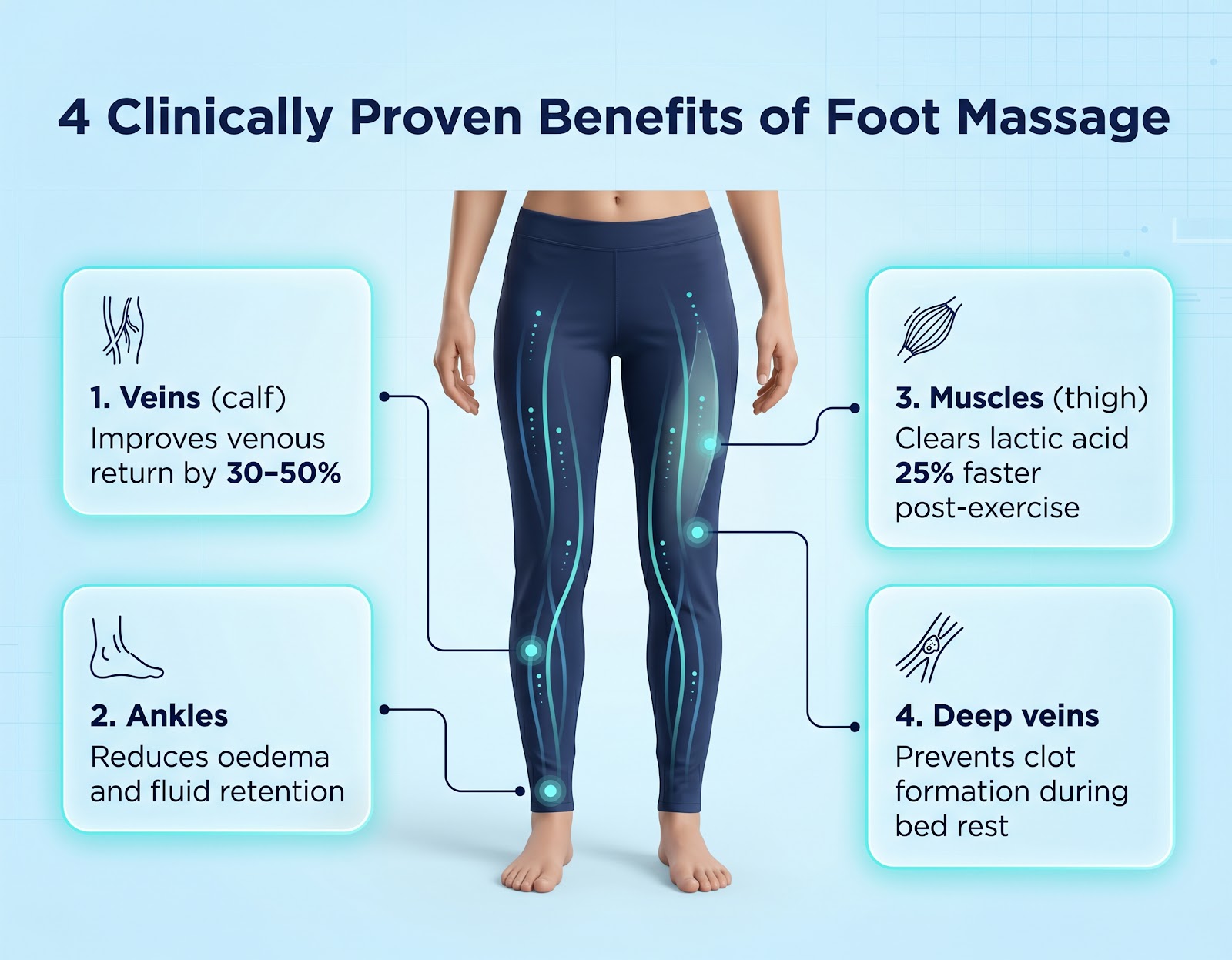
Sequential compression from ankle to thigh pushes venous blood toward the heart in the direction the circulatory system intends. Poor circulation causes cold feet, numbness, and the heavy, fatigued feeling that settles into legs by late afternoon. Regular compression therapy counteracts each of these symptoms by keeping blood moving continuously rather than allowing it to pool.
Swelling in the ankles and feet is one of the most common complaints among office workers, frequent travellers, pregnant women, and elderly individuals. The lymphatic system clears excess fluid from tissues, but it depends on muscle movement and pressure to function. Air compression massagers provide that pressure mechanically, reducing visible swelling within a single session for many users.
Athletes and physically active individuals use compression therapy for the same reason professional sports teams invest in recovery equipment: it works. Compression accelerates the clearance of metabolic waste products like lactic acid from muscle tissue, reduces delayed-onset muscle soreness, and shortens the time needed between training sessions. Many users notice a measurable difference in leg fatigue the morning after a compression session.
Restless leg syndrome affects roughly 10% of the Indian population, causing uncomfortable sensations that worsen at night and disrupt sleep. The urge to move the legs constantly interferes with falling asleep and staying asleep. Compression therapy before bed reduces the severity of these symptoms for many patients by improving circulation and releasing muscular tension accumulated through the day.
DVT occurs when blood clots form in deep veins, most commonly in the legs. Long periods of immobility (flights, long drives, extended bed rest) dramatically increase DVT risk. Sequential compression devices are used in hospitals for exactly this reason: they maintain venous flow when walking is not possible. Home air compression massagers apply the same principle for travel and recovery situations.
Not every device covers the same area or applies pressure the same way. Choosing the right type depends on your specific needs and the conditions you are looking to address.
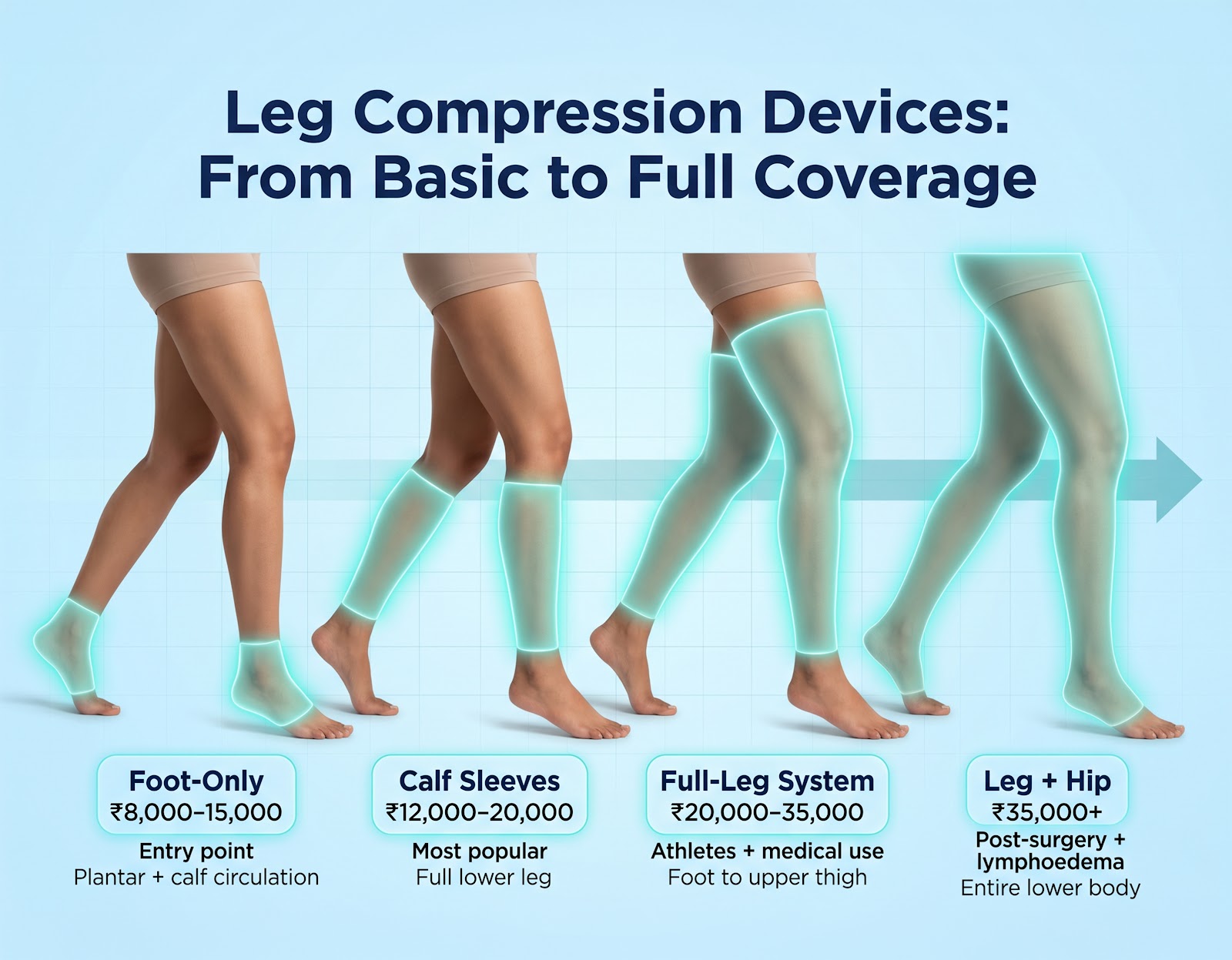
Calf-only sleeves are the most compact and affordable option. They target the area most responsible for venous return: the calf muscle group acts as the primary pump in the lower body. These work well for users dealing with calf tightness, mild swelling in the lower leg, or anyone who needs a portable option for travel.
Full leg wraps extend from foot through thigh, covering the knee in between. They are the clinical standard for lymphedema treatment, post-surgical recovery, and serious circulation management. The sequential compression across a longer path creates stronger venous return than calf-only devices. Anyone managing a medical condition should prioritise full leg coverage.
Foot and calf combinations target plantar fasciitis, foot pain, and general leg fatigue together. The foot chambers address circulation in the sole and arch, while calf chambers handle the lower leg. Many users with jobs that require standing all day find this format most useful, as both the foot arch and calf muscles carry the brunt of load-bearing work.
Sequential compression inflates chambers progressively from the bottom of the leg upward, directing blood flow toward the heart one section at a time. Simultaneous compression inflates all chambers at once. Sequential is the clinical standard. It works with the natural direction of venous return rather than applying uniform pressure that can obstruct flow. Look for sequential inflation as a baseline requirement when comparing devices.
The market offers many options at different price points. These features separate effective devices from those that simply inflate and deflate without clinical benefit.
The table below compares the main device types across the features that matter most for different users and use cases.
| Type | Coverage | Best For | Approx. Price Range |
|---|---|---|---|
| Calf-Only | Ankle to knee | Travel, mild swelling, muscle recovery | ₹3,000 to ₹8,000 |
| Foot & Calf | Sole to knee | Standing jobs, plantar fasciitis, foot pain | ₹5,000 to ₹12,000 |
| Full Leg | Foot to thigh | Lymphedema, post-surgery, DVT prevention | ₹8,000 to ₹25,000 |
| Full Leg with Heat | Foot to thigh | Chronic tension, arthritis, elderly care | ₹12,000 to ₹35,000 |
Compression therapy suits a wide range of users, but certain groups see the clearest benefits from consistent use.
Getting results from compression therapy requires consistent use and the right technique. The device is only as effective as the routine built around it.
Evening sessions deliver the best results for most users. Swelling and fatigue accumulate through the day, so applying compression therapy at day's end clears the fluid and tension that would otherwise persist through the night. Athletes benefit from sessions within two to four hours after training, before the inflammatory response fully peaks.
Twenty to thirty minutes is the clinical standard for most applications. Sessions under 15 minutes provide surface-level relaxation but insufficient time for meaningful venous return. Sessions beyond 45 minutes offer diminishing returns and can cause discomfort for some users. Set a timer and use the time for reading or winding down before sleep.
Compression that is too loose accomplishes nothing. Compression that is too tight impedes blood flow rather than assisting it. The sleeve should fit snugly without bunching or gaps. Skin should not turn significantly red or white during the session. Most devices come in multiple sizes. Measure the circumference of your calf and thigh before purchasing rather than relying on generic sizing charts.
Air compression therapy combined with leg elevation delivers stronger results than either alone. Elevating the legs above heart level while the device runs gives gravity an assist, helping venous return against the natural pull that keeps blood pooled in the lower extremities. A recliner bed with independent foot elevation controls makes this combination simple, as the foot section raises the legs to the correct angle while the compression device handles active pressure therapy simultaneously.
Several specific conditions have the strongest clinical evidence supporting air compression as part of ongoing management.
| Condition | How Compression Therapy Helps |
|---|---|
| Chronic Venous Insufficiency | Improves return of pooled blood; slows varicose vein progression |
| Lymphedema | Moves lymphatic fluid mechanically when lymph nodes cannot; reduces chronic swelling |
| DVT Prevention | Maintains venous flow during immobility; standard post-surgical hospital protocol |
| Post-surgical Oedema | Clears inflammatory fluid; reduces swelling that delays tissue healing |
| Restless Leg Syndrome | Reduces nocturnal symptoms by improving circulation before sleep |
| Peripheral Artery Disease | Supports peripheral blood flow; consult a doctor before use at higher pressures |
For patients managing chronic conditions or recovering from surgery, the combination of a recliner bed and air compression therapy creates a recovery environment that neither provides alone.
The Elev8 Smart Recliner Bed from The Sleep Company includes independent foot elevation controls that raise the legs to the exact angle recommended for compression therapy (above heart level, between 15 and 30 degrees). Running a compression session in this position means gravity assists venous return while the device provides active pressure. The combination is particularly effective for post-surgical swelling, lymphedema management, and the daily circulatory maintenance that elderly patients require.
SmartGRID mattress compatibility adds pressure relief to the equation. When the body is properly supported beneath while compression addresses active circulation above, recovery happens faster than with either intervention in isolation.
Air compression massagers require minimal maintenance, but a few regular checks keep them performing correctly.
For general wellness and fatigue recovery, three to five sessions per week is sufficient. For active medical management (lymphedema, post-surgical recovery, or chronic venous insufficiency), daily sessions are appropriate and typically recommended. If you are using compression for a diagnosed condition, confirm the recommended frequency with your doctor, as specific conditions often require specific protocols.
Most users tolerate compression therapy well, but certain conditions require medical clearance before use. These include active DVT (where compression can dislodge a clot), severe peripheral artery disease, acute infections in the leg, and open wounds or skin conditions in the compression area. Pregnant women should consult their doctor before starting compression therapy. For healthy users managing fatigue and general circulation, home devices at standard pressure settings carry minimal risk.
Start at the lowest setting for the first two or three sessions regardless of your intended use. Your legs need time to adapt to external compression, and starting at high intensity often causes discomfort that discourages continued use. For general wellness, 20 to 40 mmHg is sufficient. For lymphedema and post-surgical management, pressures up to 60 mmHg may be appropriate under medical guidance. The correct setting is the highest level that remains comfortable throughout a full session.
Swelling reduction is often visible after a single session. Chronic swelling that has built over weeks takes consistent use to reduce meaningfully. Most users notice clear improvement after five to seven daily sessions. Muscle recovery benefits are noticeable after the first few sessions for athletes. Circulation improvements affecting cold extremities and restless leg symptoms typically show over two to four weeks of consistent use.
Compression therapy does not reverse existing varicose veins, but it manages symptoms and slows progression. Varicose veins develop when venous valves fail, allowing blood to pool and vein walls to bulge. Compression supports the vein walls externally, reducing the pressure that causes further dilation. For cosmetic or advanced cases, medical treatment remains necessary, but compression therapy is a standard component of conservative varicose vein management.
Most manufacturers advise against using compression devices during sleep. The inability to monitor sensation or respond to discomfort makes overnight use inadvisable for home devices. A 20 to 30 minute session immediately before bed delivers the circulation benefits without the risk. For patients in clinical settings, overnight compression protocols exist under medical supervision. These should not be replicated at home without specific medical instruction.
Air compression therapy offers one of the most accessible and effective routes to better leg health available for home use. For ongoing recovery, elderly care, or simply reversing the damage that sedentary modern life inflicts on circulation, a well-chosen device used consistently makes a measurable difference. To complete your recovery setup, explore The Sleep Company's full range of smart beds and sleep solutions.


NASA developed the zero gravity position to reduce stress on astronauts during launch, and the same posture...
Read More
You curl into the same position every night without thinking about it. Side sleepers stay loyal to...
Read More
The benefits of sleeping on the floor have caught attention lately as people look for alternatives to...
Read More
Do you spend your nights tossing, turning, counting sheep and trying to find a comfortable position to...
Read More
Have you ever felt exhausted when your mind simply won't switch off? The clock keeps ticking, minutes...
Read More
We have all sacrificed our sleep at one point or another. Maybe it was because of a...
Read More
At times, balancing all your tasks on time – managing the work, holding the family together, and...
Read More
Did you know? India is the second most sleep-deprived country in the world. That's not all. More...
Read More
In 2008, the global community faced a significant challenge with sleep deprivation. More than 27.3% of individuals...
Read More
Do you truly enjoy at least 7 hours of sleep each night? Think again! Sleep is more...
Read More
Did you know? According to a new study, individuals, even those residing in the urban space, sleep...
Read More
Did you know? People who usually sleep less than 7 hours or rest for more than 9...
Read More
Also known as the Willis-Ekbom disease, Restless Legs Syndrome (RLS) is a sleep disorder that leads to...
Read More
You must have stumbled upon the term sleep apnea when discussing sleep disorders. Today, almost 104 million...
Read More
Almost 40% of students in India are sleep-deprived, and the reasons for this are plenty. From late-night...
Read More
Planning on taking a road trip? Make sure you prep your mind and body before the long...
Read More
Brown noise is a sound frequency that can supposedly lull you to sleep almost effortlessly. It is...
Read More
You probably remember how, as a child, you were told to relish a good night's rest before...
Read More
Do you wake up tired even after sleeping seven hours straight? Does it take excruciating long for...
Read More
Did you know? Almost 7.6% of the general population in India experiences sleep paralysis. But in sporadic...
Read More
In this mechanical era, stress has become a part and parcel of our lives. But too much...
Read More
Are you someone who craves a nap after a stomach-filling lunch? Or maybe uncontrollable yawns become an...
Read More
Dementia is a medical condition where a person’s brain function becomes impaired. Here, they experience symptoms, such...
Read More
Most of us have a similar morning routine: The alarm blasts through the phone, we wake up...
Read More
Have you ever taken note of your mood in the morning? Sometimes, you wake up feeling on...
Read More
Also known as night eating syndrome, sleep eating disorder is when you encounter frequent sleep interruptions because...
Read More
If you are a new parent, it may sometimes feel like a struggle because babies don't have...
Read More
Whoever coined the phrase 'to sleep like a baby,' never took the effort behind it into consideration....
Read More
We have all seen how once in a while, our partners or children mumble in their sleep....
Read More
Dreams usually feel like movies curated specially for us by our subconscious mind. While in most cases...
Read More
As an adult, we all crave naps, don't we? But did you know nap time is crucial...
Read More
As you slide into your dreamland, usually, you snooze unbothered. However, if you are a snorer, it's...
Read More
We all know sleep is the Holy Grail for good health. But how many of us can...
Read More
Best Sleeping Direction as per Vastu: Complete Guide to Better Sleep You've probably heard your grandmother mention...
Read More
Almost 78.2% of the population is struggling with symptoms of sleep disorders. Are you one of them?...
Read More
As a parent, you are always looking out for your child. But what about their sleep? When...
Read More
Almost 10 to 12 million individuals in India suffer from epilepsy. It is a neurological disorder, which...
Read More
Being alone doesn’t mean lonely. And, the ability to enjoy solitude is something that we develop through...
Read More
She fell asleep, and it was a sleep as thin as the night clouds, dotted with dreams...
Read More
Imagine this. You have not had a good night’s rest, and you wake up all groggy. You...
Read More
Congratulations! You are carrying your tiny bundle of joy. Excitement must be at its peak. But one...
Read More
Do you spend your nights tossing and turning unable to relish a sweet slumber? Feeling...
Read More
The holiday time has officially begun. As the new year is approaching and the winter mornings become...
Read More
In the hustle and bustle of our daily lives, finding a moment of peace can be a...
Read More
Have you also had the most irrelevant thoughts right before you go to sleep? Ever feel like...
Read More
When someone asked about how to sleep better at night naturally? Simply answer, Sleep is important for...
Read More
Is it one of those nights where you are tired yet awake and staring at the ceiling...
Read More
Do you experience difficulty sleeping through the night? Even your best mattress appears to be uncomfortable at...
Read More
Are you one of those people who love those few more minutes snuggled on the soft mattress...
Read More