
My Cart
Order Note


Mattress

Pillow & Cushion

Chair

Desk

Recliner Sofa

Recliner Bed

Elite Sofa

Bedding

Massager
Mattress
Recliner Bed
Recliner Sofa
Elite Sofa
Chair
Desk
Bedding
Pillow & Cushion
Massager
Mattress
Pillow & Cushion
Chair
Desk
Recliner Sofa
Recliner Bed
Elite Sofa
Bedding
Massager
Talk to Us
Get Help Choosing the Right Product

Stores near you
Find and visit our experience stores
Request a call back
Talk to our experts about our products
For your New Home
Find the perfect mattress - chat now


My Cart


Adults who experience fear of sleeping alone rarely talk about it, yet the condition affects more people than you might expect. When bedtime arrives and the room is empty, genuine anxiety can set in. Doctors refer to this as somniphobia, a clinical term that captures what happens when sleep itself becomes a source of dread. The fear tends to overlap with related anxieties (darkness, vulnerability while unconscious, intrusive thoughts at night) making it a layered experience for those affected.
Getting to the root of this fear matters because understanding the cause helps shape the solution. This article covers why fear of sleeping alone develops, what warning signs to watch for, and evidence-based approaches that have helped others sleep more peacefully on their own.

Thousands of years ago, sleeping in isolation made a person vulnerable to predators and other threats. Group sleeping was a survival strategy, and our ancestors who felt uneasy alone at night were more likely to stick with the group and live longer. Modern bedrooms have locks, alarms, and solid walls, but the ancient part of the brain (the amygdala, primarily) still runs its old programming. When you lie down alone at night, that primitive alarm system can activate even though there is no actual danger present.
Sleep associations form early, and negative experiences tend to stick. A child who was made to sleep alone before feeling emotionally ready, or who had recurring nightmares without a parent to provide comfort, may carry those impressions well into adulthood. Hearing scary stories at bedtime, being locked in dark rooms as punishment, or experiencing a frightening event in a bedroom can all create associations that link sleep with fear rather than rest.
When traumatic events occur at night or in bedrooms, the consequences for sleep can be severe and long-lasting. Home invasions, assaults, witnessing medical emergencies while alone, or losing a loved one during nighttime hours can fundamentally change how the brain responds to sleeping alone. Post-traumatic stress disorder (PTSD) commonly includes hypervigilance at night, where the person cannot relax into sleep because their nervous system stays on high alert.
Generalised anxiety does not switch off when the lights go out, and for many people, nighttime makes it worse. Daytime activities provide distraction from anxious thoughts, but in a quiet, dark bedroom, there is nothing to occupy the mind except worry. People who wonder why am I scared of sleeping alone suddenly may find that underlying anxiety has been building and simply becomes most noticeable in those quiet nighttime hours when nothing else competes for attention.
Divorce, separation after a long relationship, the death of a partner, or adult children leaving home can all trigger fear of sleeping alone. After years of sharing a bed with another person, the nervous system adapts to their presence. Their breathing, warmth, and movements become signals of safety. When that presence disappears, the absence feels wrong on a physical level, not just emotionally. The adjustment period can last months and involve genuine fear, not simply loneliness.
Fear of sleep shows up in different ways depending on the person. Common patterns include a growing sense of dread as bedtime approaches, an inability to fall asleep without lights on or the television running, only managing to sleep when someone else is present in the home, and experiencing panic or severe distress at the prospect of spending a night alone.
Physical symptoms frequently accompany the psychological experience:
These are stress responses, and they make falling asleep nearly impossible.
Behaviour changes often signal the problem as well. Someone dealing with this fear might:

Fear of the dark when sleeping often underlies or intensifies somniphobia. Clinically termed nyctophobia, this fear creates its own set of challenges at bedtime. In low light, the brain receives limited visual information and tends to fill the gaps with imagined threats. Shadows look like figures, ordinary sounds seem ominous, and the mind creates dangers that are not there.
This response has evolutionary roots as well, since reduced vision did mean increased danger for most of human history. Knowing this does not automatically resolve the fear, but it can reduce self-judgment about having it. Making changes to your bedroom environment — such as adding a dim nightlight or using blackout curtains with controllable ambient lighting — can help address darkness-related anxiety without fully disrupting sleep.
Checking locks once before bed provides legitimate reassurance. Checking them repeatedly, however, can reinforce anxiety rather than reduce it. Know what security measures your home has, and consider whether additions (door wedges, window sensors, an alarm system) would genuinely help you feel safer. The aim is to address real concerns so that your brain has permission to relax, not to create rituals that feed the fear.
The physical conditions of your bedroom affect sleep quality significantly. Room temperature matters (both too hot and too cold trigger alertness), and a supportive mattress prevents the physical discomfort that causes waking during the night. If complete darkness triggers anxiety, a small nightlight provides enough visibility to reassure without disrupting melatonin production the way overhead lights would.
For many people, the silence of an empty house makes sleep harder. Every small noise — a settling pipe, a distant car, the refrigerator cycling on — can trigger alertness. White noise machines, fans, or low-volume background audio (podcasts, audiobooks, or ambient sounds) can mask these small noises and fill the silence that some find threatening. The key is choosing audio gentle enough that it does not prevent sleep.
Forcing yourself through nights of intense fear tends to increase dread rather than reduce it. Gradual exposure works better for most people. Start by spending time alone in the bedroom while awake, reading or doing other calming activities. Then try daytime naps alone. Progress to sleeping alone with another person elsewhere in the home, and eventually to sleeping alone entirely. Each step should feel manageable, not overwhelming.
When broader anxiety fuels fear of sleeping alone, addressing the larger issue helps the most. Relaxation techniques practiced before bed (progressive muscle relaxation, breathing exercises, gentle stretching) can lower baseline stress levels. Regular daytime exercise helps burn off anxious energy, and reducing caffeine intake after noon prevents chemical amplification of anxiety in the evening hours.
Cognitive behavioural therapy adapted for insomnia and sleep fears (CBT-I) has strong evidence behind it. A trained therapist can help identify the thought patterns making the problem worse and guide the development of healthier associations with sleep. For those whose fear of sleeping alone stems from trauma, approaches such as EMDR (Eye Movement Desensitisation and Reprocessing) or other trauma-focused therapies can address the root cause rather than just managing symptoms.
Over time, the bedroom should become a space associated with rest rather than anxiety. This means removing work materials, limiting the use of devices linked to stress, and reserving the bed primarily for sleep. Sleep quality improves when the brain learns to associate the bed exclusively with sleeping and relaxation rather than with worry or activity.
A consistent bedtime routine signals the brain to begin winding down. Reading a physical book, doing gentle stretches, or listening to calming music creates a transition period between the active day and sleep. Over time, these rituals become cues that help an anxious mind settle.
Physical discomfort keeps the nervous system on alert. Supportive pillows that maintain proper neck alignment, breathable bedding that regulates temperature, and a mattress suited to your preferred sleeping position all reduce the physical triggers that can cause waking and compound psychological anxiety.
Occasional unease about sleeping alone is a normal human experience. Persistent, severe fear that affects work, relationships, or health crosses into territory where professional support becomes important. Signs that it may be time to seek help include:
Mental health professionals who specialise in sleep disorders can provide evidence-based treatment. A general practitioner can offer initial assessment and referral. Insurance typically covers treatment when sleep problems demonstrably affect a person's ability to function.
Fear of sleeping alone responds well to patient, consistent effort. Most people notice meaningful improvement within weeks of implementing environmental adjustments and gradual exposure. Those dealing with underlying trauma or severe anxiety may need professional support, and that support is readily available. The goal is not to eliminate all awareness of being alone at night but to reduce fear to a level that allows restful sleep. Comfortable environments, sensible security habits, and healthier sleep associations all contribute to this outcome.
Yes, this fear affects many adults though it is rarely discussed openly due to embarrassment. The condition becomes more prevalent after major life changes such as divorce, bereavement, or traumatic experiences. Adults experiencing this fear are not alone, even though it may feel that way.
Somniphobia is the clinical term for fear of sleep or sleeping. It can manifest as fear of being alone at night, fear of what might happen during sleep, dread of nightmares, or anxiety about the vulnerability involved in being unconscious. Cognitive behavioural therapy is the primary treatment approach.
Gradual exposure combined with modifications to the sleep environment works for most people. Creating a secure, comfortable bedroom matters. White noise or background audio can help if silence triggers anxiety. Practicing time alone in the bedroom while awake, before attempting to sleep there, builds comfort incrementally.
Sudden onset typically follows life changes such as relationship endings, moving to an unfamiliar home, traumatic experiences, or loss. The brain may also begin expressing long-suppressed childhood fears during periods of high stress. Identifying the specific trigger helps determine the most appropriate approach.
Medication may help break cycles of severe sleeplessness in the short term, but doctors generally consider it a temporary measure. Anti-anxiety medications carry risks of dependency. CBT-I (cognitive behavioural therapy for insomnia) produces better long-term outcomes without the concerns associated with ongoing medication use.
Dim nightlights typically provide comfort without significantly disrupting sleep quality. Bright overhead lighting, however, interferes with melatonin production and makes sleep harder. Finding a balance (low-level ambient lighting rather than complete darkness or full room lighting) usually works best.


Best Back Massager Machines: Shiatsu vs Regular Back Massagers Back pain does not announce itself politely. One...
Read More
Shiatsu Massage: Complete Guide to Techniques, Benefits and How Modern Massagers Use It Finger pressure. That is...
Read More
Types of Recliners: Complete Guide to Choosing the Right Recliner for Your Home Types of recliners with...
Read More
Shiatsu Massage: Complete Guide to Techniques, Benefits and How Modern Massagers Use It Finger pressure. That...
Read More
Sleeping Positions: What Works, What Hurts, and What Actually Helps Same position every night. You curl up...
Read More
Sleep trackers have made one thing obvious: the heart rate at night behaves differently from what most...
Read More
10 Amazing Foot Massager Benefits: Why You Need One Daily Most people ignore their feet until something...
Read More
Your Complete Guide to Multipurpose Massagers Picture this: you've just wrapped up a 12-hour workday, your shoulders...
Read More
How to Use a Foot Massager & Top 5 Mistakes to Avoid Your feet carry you through...
Read More
Massager Gifts for Relaxation: Your Complete Guide to Thoughtful Wellness Presents Trying to find a gift that...
Read More
The Benefits of a Full Body Massager: Stress Relief, Pain Reduction & Better Circulation Most people don't...
Read More
Foot Massager vs Spa Pedicure: Which Is Actually Better for Your Feet? The debate between foot massagers...
Read More
Human feet carry roughly 8,000-10,000 steps daily. Over a lifetime, that translates to about 185,000 kilometres—circling Earth...
Read More
Walk into any office around 4 PM. You'll spot at least three people rubbing their necks, two...
Read More
In today’s fast-paced world, stress and physical fatigue have become part of our daily routine. Long hours...
Read More
Diwali isn’t just the festival of lights; it’s the festival of laughter echoing through hallways, the fragrance...
Read More
Diwali brings happiness, sweets, lights, and lots of laughter into our homes. Following days of celebration, the...
Read More
As one of Indias most beloved festivals, Deepawali, also known as Diwali is celebrated as the festival...
Read More
Diwali 2025 is finally upon us, and the festive spirit of celebration has ignited joy, peace and...
Read More
Diwali is the season of light, joy, and renewal. Every year, we scrub floors, polish furniture, and...
Read More
Navratri is not just a festival, it is nine nights of joy, devotion and rhythm. Streets are...
Read More
The Complete Home Reset Before Diwali: Commencing with Your Sleep Haven As we are reaching closer to...
Read More
Onam is more than a festival. Its a beginning and a transformative period for so many people....
Read More
The festive season is right around the corner, and with it comes the joy of welcoming Bappa...
Read More
From the humming of late-night traffic and cars to the glowing street lights and billboard signs, metro...
Read More
Good food is a good mood. This is true in every aspect. Our food choices impact our...
Read More
India has around 87.5 million cases of low back pain. This staggering number is because of a...
Read More
We don't really think much about our coccyx or tailbone, do we? At least not until we...
Read More
We all want our mornings to be exactly like they show in movies, don't we? The kind...
Read More
On February 28 this year, the India Meteorological Department warned us of yet another year of extreme...
Read More
IPL 2025 is just around the corner, but the preparation for the same goes on all year...
Read More
On the pitch with their heads held high, the Mumbai Indians team is a dominant force in...
Read More
The pitch is set, the players have prepared and the Indian Premier League (IPL 2025) is ready...
Read More
Did you know? Your spine is made up of 33 individual vertebrae at birth. However, as you...
Read More
AI is not just limited to GPT or your smartphone's virtual assistant. Infact, mattresses are also getting...
Read More
Our bedrooms are more than just a place to sleep, aren't they? For some, it’s a space...
Read More
Stress has become the norm today. Maybe it’s because of the digital era we live in or...
Read More
Wondering what to do with your old mattress? We have all been there! But disposing of it...
Read More
Got a housewarming invite? Now comes the big question—what to gift? The best gifts are those that...
Read More
Did you know? Your baby's sleeping position affects the pattern of early motor development. Prone sleepers attain...
Read More
Your sofa isn't just a piece of furniture but it's almost like your personal catch-up spot. The...
Read More
Did you know? 64% of Indians don't sleep enough. While chronic sleep deprivation has become a common...
Read More
From the outside, a desk job looks like a dream job. You spend your day sitting on...
Read More
I have a desk, but I don't want to sit at it all day. - Richard Branson...
Read More
In today's mechanical era, where time has become sparse, yoga can offer that much-needed respite to give...
Read More
How many cups of coffee do you down as soon as you wake up? Or maybe tossing...
Read More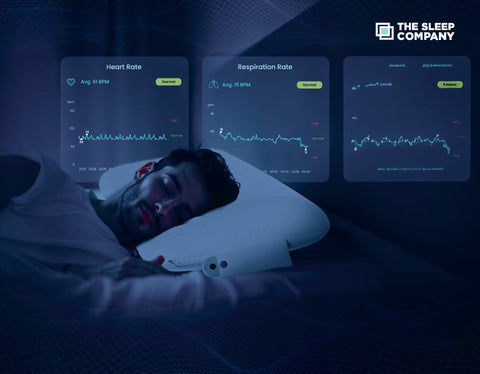
Once upon a time, tracking your sleep meant roughly calculating the hours spent in bed from when...
Read More
As the wedding season is on, this New Year will be filled with moments to enjoy love,...
Read More
Today, about 30% of the Indian population has insomnia. Now, a good night's rest is not only...
Read More